Oct 26, 2026
Press
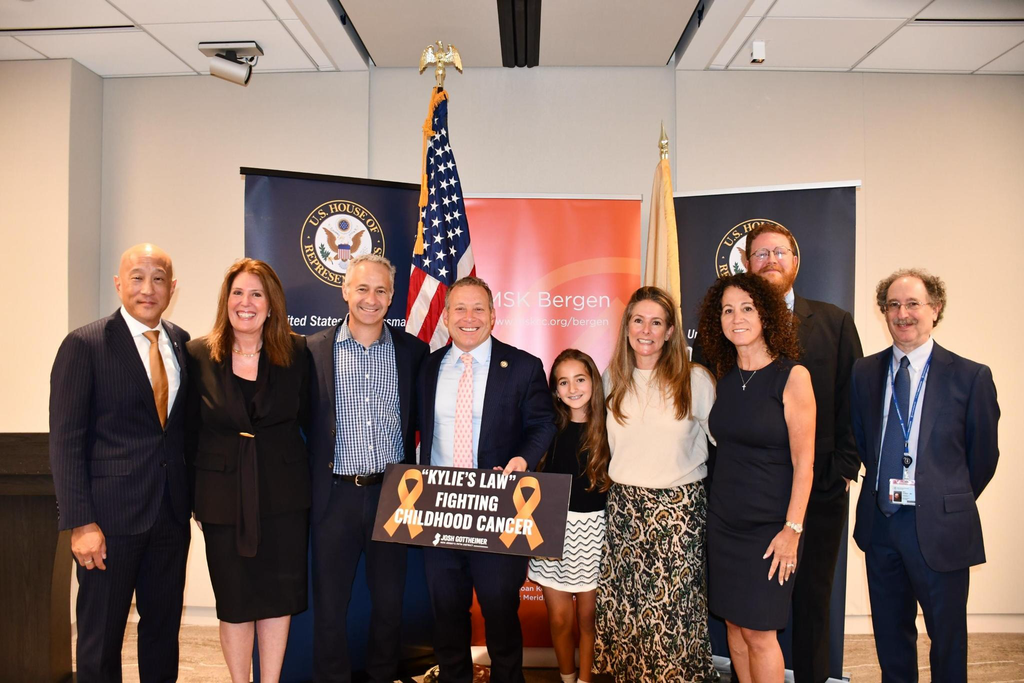
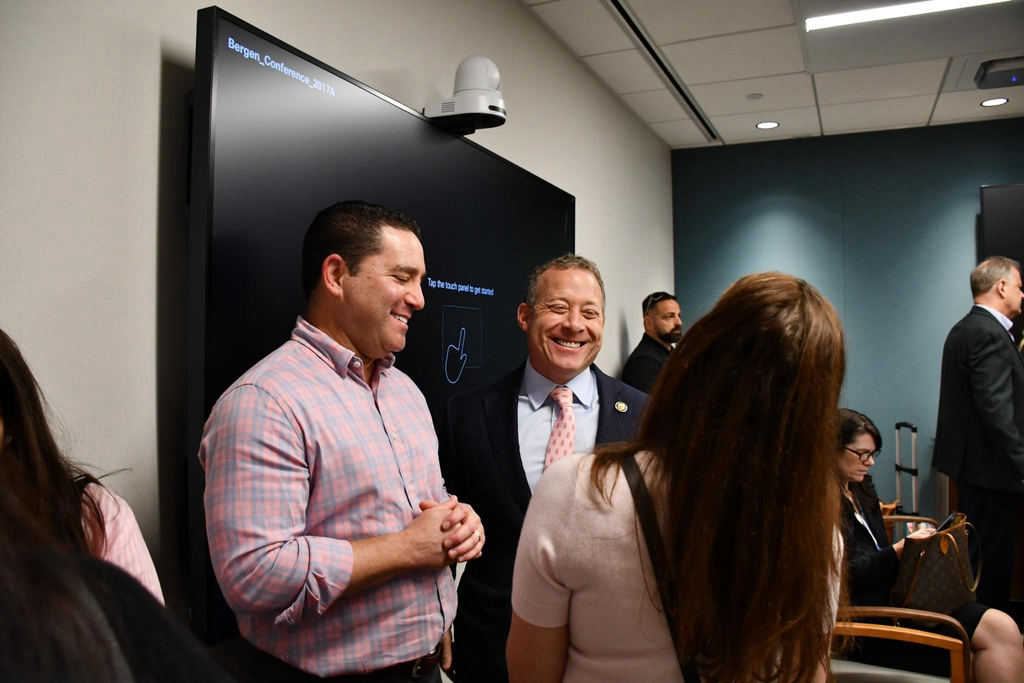
Above: Gottheimer announces “Kylie’s Law” at Memorial Sloan Kettering Bergen.
MONTVALE, NJ — Today, Tuesday, September 22, 2026, during Childhood Cancer Awareness Month, at Memorial Sloan Kettering Bergen in Montvale, Congressman Josh Gottheimer (NJ-5) announced the introduction of the bipartisan Kylie’s Voices for Childhood Cancer Act, or “Kylie’s Law,” with his colleague Congressman Mike Lawler (NY-17).
Named in honor of a close family friend of Gottheimer, Kylie Kupperman, the bill would require states to include at least two pediatric cancer experts on the coalitions that write state cancer control plans, ensuring children’s needs aren’t overlooked in blueprints built largely around adult cancer.
Kylie was born in Englewood, New Jersey, and grew up in Chappaqua, New York. Just weeks before her fourth birthday, she was diagnosed with medulloblastoma, a rare and fast-growing pediatric brain tumor. After undergoing months of surgery, chemotherapy, and radiation, she was declared cancer-free. Just as she was starting her freshman year at the University of Delaware, her cancer returned. She tragically passed away on September 10, 2025, at age 19.
Every state has a Comprehensive Cancer Control Coalition that shapes its long-term cancer plan, but only about a third of states build specific childhood cancer goals into those plans. New Jersey ranks third in the nation for pediatric cancer incidence, with roughly 440 children and teens diagnosed every year and nearly 1,900 cases across Bergen, Passaic, and Sussex Counties over one recent 25-year stretch.
Watch Gottheimer’s remarks here.
“Kylie should be starting her junior year of college right now — and wow, you should have heard how her friends gushed about her — and how her brother and sister who played games and music for her — and carried her up the stairs when she was too weak.” said Congressman Gottheimer (NJ-5). “But, instead of being at the University of Delaware, her parents are here today, along with friends from Jersey, Chappaqua, and beyond, to honor and celebrate her memory, and to continue fighting Kylie-style, so that no other family has to go through what they went through.”
Kylie’s Law will:
Gottheimer’s additional actions:
“When a child is diagnosed with cancer, the last thing their family should have to worry about is whether they can afford the care or find the treatment their child needs. We must keep working together and investing in lifesaving research and care so that every child has the chance to grow up, follow their dreams, and live a long, healthy life,” said Congressman Mike Lawler (NY-17).
“As the father of a childhood cancer survivor, I know the toll this awful disease has on our families. Our community deserves to be heard, and I am thankful to Reps. Gottheimer and Lawler for their steadfast support. We are proud to stand alongside the Kupperman family as we honor their daughter’s memory through the Kylie’s Voices for Childhood Cancer Act. Together, we will ensure that the pediatric cancer community has a seat at the table, ” said Jeff Gelfand, CEO, Pediatric Brain Tumor Foundation.
“At the Rally Foundation for Childhood Cancer Research, we fought to ensure kids with cancer were part of the state cancer plan and efforts in Georgia. Childhood cancer offers unique challenges, and our families deserve a voice in the process. This new bill would guarantee our advocates can be heard throughout the country. We are happy to support this legislation,” said Dean Crowe, Rally Foundation for Childhood Cancer Research.
“Coalition members have worked tirelessly to make sure kids with cancer aren’t an afterthought, but in too many spaces, they still are. This bill gives patients, families, clinicians, and researchers real power to fix that. We thank Reps. Gottheimer and Lawler for standing up for kids with cancer, and we urge their colleagues to join them,” said Ginny McLean, Board Chair, Coalition Against Childhood Cancer (CAC2).
“As a survivor of childhood cancer, I know firsthand the impact of cancer. Patients and survivors carry experiences, challenges, and perspectives that cannot be fully understood from data alone. We have lived the journey, from diagnosis and treatment to survivorship, and our voices can help ensure that policies reflect what children, survivors, and families actually need. This bill is about making sure the people most affected by childhood cancer have a voice in shaping the future of cancer care in our states, and we are proud to support it. Thank you to Representatives Gottheimer and Lawler for prioritizing this,” said Grace Eline, childhood brain tumor survivor, Founder and CEO, WITH Grace Initiative.
“Adolescents and young adults (AYAs, age 15-39) diagnosed with cancer face complex medical, financial, and emotional hurdles that standard pediatric and adult care systems fail to address. Age-specific, tailored care is critical to long-term survivorship. As the leader in building the AYA cancer community, Stupid Cancer is proud to support Kylie’s Voices for Childhood Cancer Act and thanks Representative Gottheimer for his leadership in this area,” said Alison Silberman, CEO of Stupid Cancer
The bill builds on Gottheimer’s record of leading actions on childhood cancer. He is co-leading the bipartisan Fairness to Kids with Cancer Act to align federal cancer research funding with the share of kids affected by the disease, and helped pass the Mikaela Naylon Give Kids a Chance Act into law, which gives the FDA new authority to require pediatric studies of combination cancer therapies. In 2018, he helped enact the Childhood Cancer STAR Act, strengthening research and survivorship tracking, and he is currently a cosponsor of the Lainie Jones Comprehensive Cancer Survivorship Act, which improves care for survivors of childhood cancer. This year, he also led an appropriations letter calling on the CDC to develop better guidance for adolescent and young adult cancer patients, which was included in the House appropriations bill that passed committee this summer.
Gottheimer was joined by Senator Holly Schepisi, Memorial Sloan Kettering Chair of Pediatrics Dr. Andrew Kung and pediatric oncologist Dr. Ira Dunkel, Congressman Mike Lawler’s District Director Donna Chiapperino, Pediatric Brain Tumor Foundation Director of Advocacy Mike Henry, the Christopher Brandle Joy of Life Foundation, Adam and Haley Kupperman, and the family and friends of Kylie Kupperman.
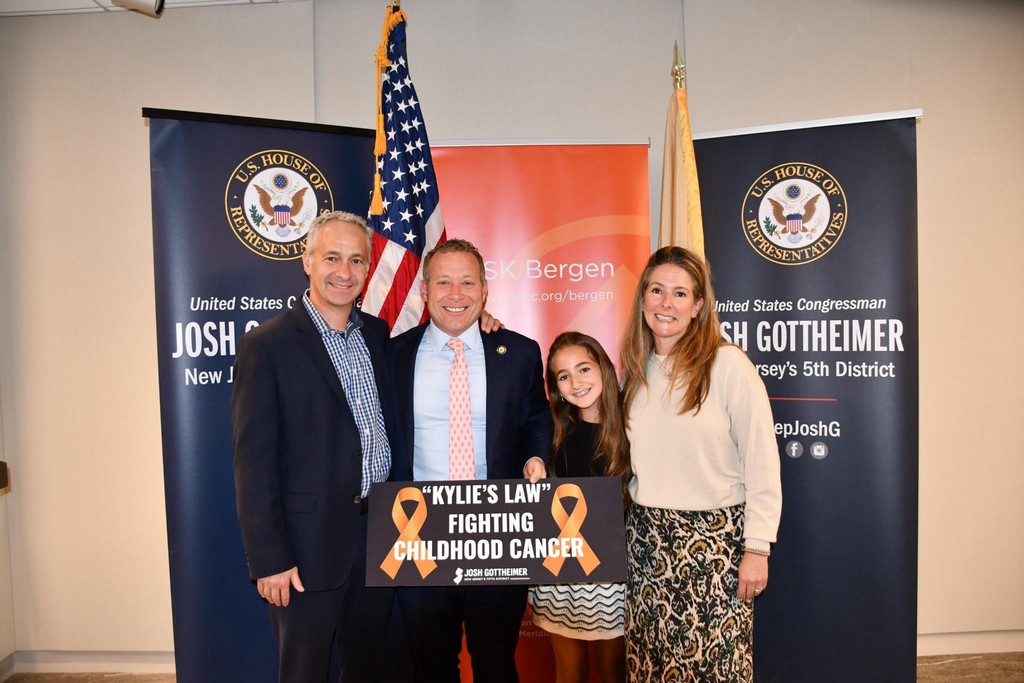
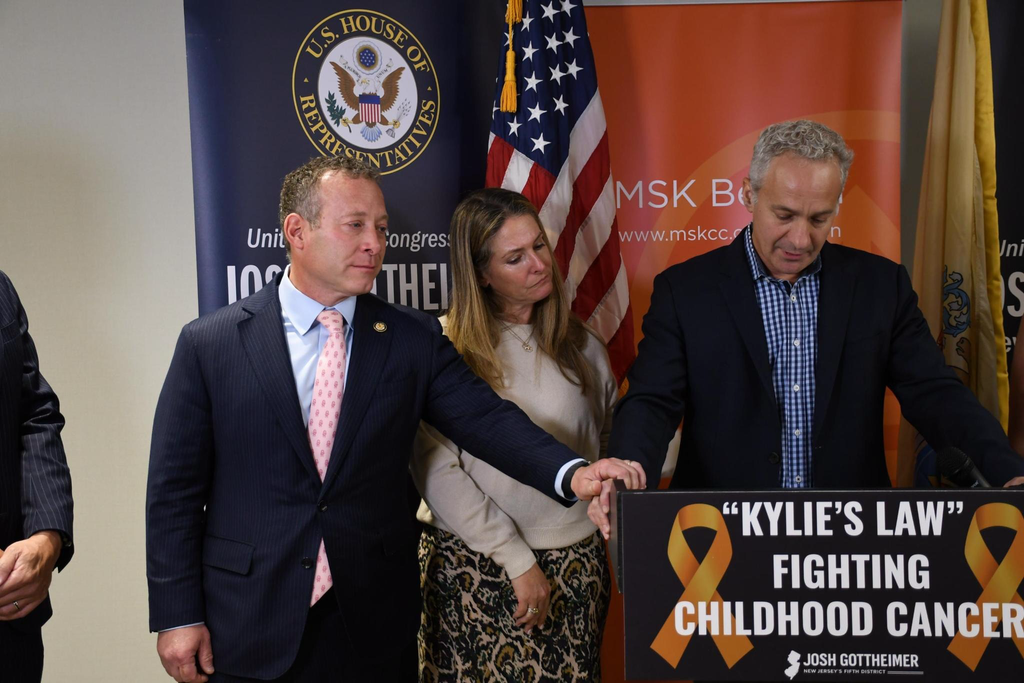
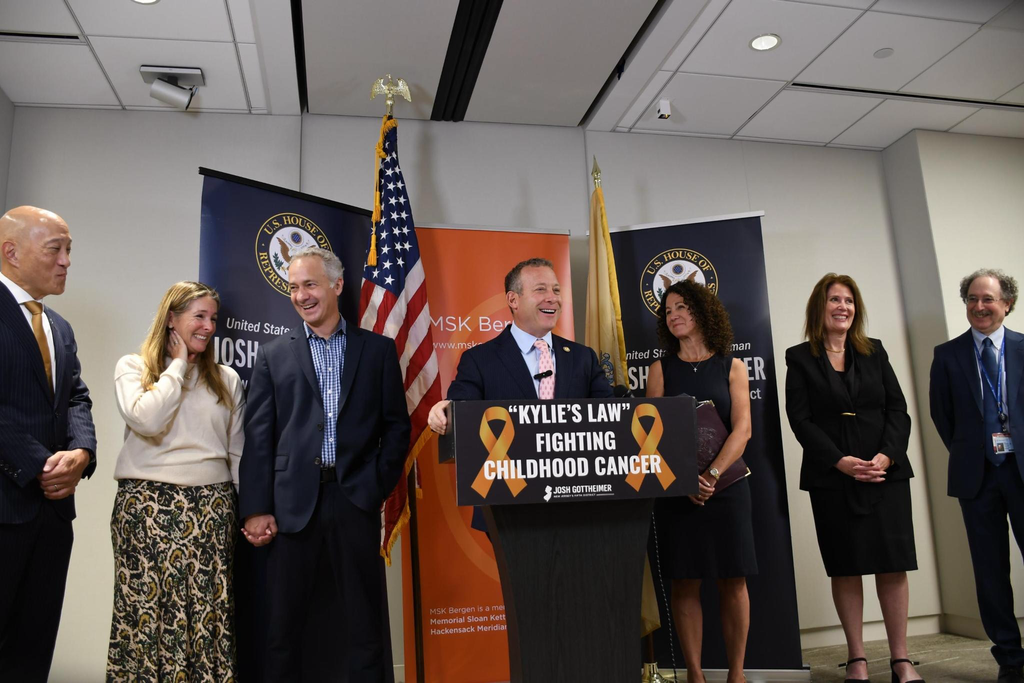
Gottheimer remarks as prepared for delivery:
Good morning, everybody. My name is Congressman Josh Gottheimer, and I represent New Jersey’s Fifth Congressional District, just a stone’s throw from the Kupperman’s congressional district and where they live in Chappaqua, New York — represented by my friend, Congressman Mike Lawler. Thank you, Donna, for being here, and to Senator Schepisi, and to Mike Henry from the Pediatric Brain Tumor Foundation.
Thank you to Memorial Sloan Kettering Bergen for having us here today, right in the heart of my district, and in North Jersey, for all you and your incredible doctors, nurses, and techs do as a global leader in the fight against cancer. By being right here in Montvale, families in our Jersey communities can receive your critical care closer to home, without having to drive into New York City.
Just last week, MSK’s pediatric cancer program, MSK Kids, where Kiley was treated, was named among the nation’s best children’s hospitals by the U.S. News & World Report.
For thousands of families across our district, state, and country—including some of my own friends and family — MSK has been a place of hope, comfort, and support when they have needed it most.
That kind of care and compassion doesn’t happen by accident. That happens because of the incredible doctors, the nurses, the techs, and every single person who walks these halls and decides, every single day, that the fight against cancer is worth everything they’ve got. So, before I say another word: to everyone who works here, thank you, and North Jersey is lucky to have you.
While cancer is brutal and unforgiving for anyone, I think we’d all agree that when a child gets it, there is something that’s extra cruel and heart-wrenching about it. Cancer remains the leading cause of death from disease among children in America. This year alone, more than 15,000 children and teenagers across America will be diagnosed with it. One in 264 children in America before they turn 20 will develop cancer.
And while, thank God, today about 85% of children survive at least five years after diagnosis, the challenges don’t end with treatment. Between 60 and 90% of survivors will develop a chronic health condition later in life because of what the treatment did to their growing bodies.
Here in New Jersey, this isn’t an abstract issue. Our state ranks third in the entire country for pediatric cancer incidence. Roughly 440 children and teenagers in New Jersey are diagnosed with cancer every single year.
That’s more than one every single day. These are the kids that play on our neighborhood playgrounds, get picked up on the school bus, and compete on the Little League field.
It goes without saying that we should be doing everything humanly possible — from research, to treatments, to public policy — to protect America’s children from cancer.
We’re here this morning, during Childhood Cancer Awareness Month, because there’s one area where we can and must be doing more to help pediatric cancer — and it’s one most don’t even know exists.
Every state in America has what’s called a Comprehensive Cancer Control Coalition, which brings together public health officials, medical professionals, researchers, and advocates to help develop the state’s cancer control plan. These plans serve as a roadmap for how states address cancer — from prevention and treatment to support for patients and survivors — for five to ten years at a time. Think of these plans as the state’s attack plan for curing cancer and treating patients.
But, here’s the problem: pediatric cancer experts are too often missing from the table. And, when the people who understand childhood cancer best aren’t helping write these plans, our children’s needs can — and too often do — get overlooked. Currently, only about a third of states include specific childhood cancer goals or recommendations in their plans. That’s unacceptable. We’re lucky, because New Jersey actually includes pediatric cancer goals and representatives in our state cancer plans. New York doesn’t right now, but, apparently, they’ve recently agreed to add pediatric experts to their state cancer coalition. Still, that leaves more than thirty states that don’t.
Let me explain why this matters. What many people don’t realize is that childhood cancer is very different from adult cancer. It requires different research, different treatments, and different survivorship care. A five-year-old’s body doesn’t respond to chemo, radiation, and medication the way a fifty-year-old’s does, and it doesn’t recover the same way either. But, when the folks writing these plans are focused almost entirely on adult cancer, children’s needs too often get left out. That’s why having pediatric cancer experts at the table matters.
For decades, children weren’t even considered in addressing pediatric cancers. The same goes for drugs and treatments. Research shows a six-and-a-half-year gap between when cancer drugs were first tested in adults and when they were first tested in children. For children with sarcomas and brain cancer, the treatment gap is even greater—nearly two decades behind adults. Our kids deserve better.
The bottom line: when it comes to cancer, caring for our children is different than adults — and they deserve attention, plans, research, and treatment tailored for them, because our children aren’t just statistics.
They are our loved ones — our family members, our neighbors, our closest friends.
If you’ll allow me, I want to talk about a victim of childhood cancer — a very special young woman none of us will ever forget. Kylie Kupperman. She’s the reason this fight is deeply personal for me — and I want you to know her story.
Kylie’s parents, Hayley and Adam, who you heard from, are very dear friends of mine. We all went to college together, including with my wife, Marla, who is here.
Adam is my best friend. I was his best man at his wedding, and he was mine. So, I had the privilege of knowing Kylie from the day she was born here in Englewood, New Jersey, and watching her grow up in Chappaqua. Just weeks before her fourth birthday, and I’ll never forget this phone call, Kylie was diagnosed with medulloblastoma — a rare and fast-growing pediatric brain tumor. She went through surgery, followed by months of chemo and proton therapy, which is targeted radiation, up in Boston. She was a trooper. Kylie beat her first battle with pediatric cancer. After a few years, she was declared cancer-free.
But, that was just the beginning of her fight. The very treatments that saved her life slowed her growth and made school a real struggle. She was smaller than all her classmates. She had to work twice as hard just to keep up. She was small but mighty — I can relate. While she was raised in New York, she had the Jersey fight she was born with — Adam is a Bergen County guy — and the tenacity to rise to the occasion. And through every bit of it, everyone who loved her called her “Smiley Kylie” because that smile never left her face, no matter what her body had been through.
She kept dancing at her ballet recitals. Loved camp and her friends – and the color pink. She kept being the big sister her siblings — Alexa and Jared — adored. And, she kept working, and working, and working in school, even when it wasn’t always easy — until she got into her first-choice college, the University of Delaware, to study fashion and design, and with a merit scholarship to go with it. That’s the Kylie I knew. Pretty, sweet, and a determined young woman who built the life she wanted, no matter what obstacles anyone put in front of her. Everyone loved her.
And then, just as she was starting her freshman year, Kylie’s cancer sadly came back. It spread to parts of her brain that doctors couldn’t operate on. But, the Kuppermans and Kiley fought it the way she’d always fought – with more courage than most adults I have ever known, but it was too much, even for her. Kylie passed away peacefully in her sleep on September 10 last year. She was a sophomore at the University of Delaware. She was nineteen years old.
Kylie should be starting her junior year of college right now — and wow, you should have heard how her friends gushed about her — and how her brother and sister who played games and music for her — and carried her up the stairs when she was too weak. But, instead of being at Delaware, her parents are here today, along with friends from Jersey, Chappaqua, and beyond, to honor and celebrate her memory, fighting Kylie-style so that no other family has to go through what they went through.
Here’s the thing: when Kylie was first diagnosed in 2009, we know that the studies, treatments, and plans were years behind those for adults with cancer. As a member of Congress, that’s unacceptable to me. We must make sure that kids like Kylie are part of the plan when states decide how to fight cancer.
As I said, right now, only seventeen states in our entire country have set specific goals for childhood cancer in their state cancer plans or through other state initiatives.
Even while New Jersey has a dedicated pediatric cancer research fund and pediatric cancer groups on our cancer coalition, our state’s cancer plan still lacks a dedicated section laying out goals and recommendations for childhood cancer. In other words, there is still room for improvement. Every state should have comprehensive requirements.
That’s why today, on the anniversary of her bat mitzvah seven years ago, I’m introducing Kylie’s Voices for Childhood Cancer Act, or “Kylie’s Law,” with Congressman Mike Lawler of New York. This is a bipartisan bill, because keeping children supported and healthy shouldn’t be a Democrat or a Republican issue.
Here’s what it does. First, it requires that any state receiving federal funding for its comprehensive cancer control plan include at least two pediatric cancer experts on its coalition. Not zero. Not “maybe, if there’s room.” At least two dedicated champions for pediatric cancer and voices in every single state. This makes sure our states are building plans, studies, and initiatives that support, fund, and are tailored to pediatric patients.
Second, Kylie’s Law directs the U.S. Department of Health and Human Services – or HHS – to establish a new national committee, the Cancer Control Plan Pediatric Cancer Advisory Committee.
It will bring together representatives from the National Cancer Institute, the National Institutes of Health, the CDC’s National Comprehensive Cancer Control Program, state programs funded through Title V and HRSA, and pediatric cancer professionals, survivors, and caregivers who have lived this fight themselves. This committee will develop best practices and recommendations for addressing pediatric and adolescent cancer in state cancer plans. That means sharing what’s working and helping states use available HRSA and Title V funding to better support children with cancer and their families.
We are not just adding representatives in each state, but we are also creating a national committee that will support those representatives and ensure real change.
Third, Kylie’s Law expands the Maternal and Child Health Services Block Grant Program to make pediatric cancer an explicit part of its mission. That allows states to use federal dollars that are already there, right now, to help children like Kylie, instead of leaving that money on the table.
But, we’re not stopping at the federal level.
I’m proud to be partnering with Assemblywoman Lisa Swain, Senator Joe Lagana, and Assemblyman Chris Tully, who are introducing new state legislation here in New Jersey to codify requiring pediatric cancer representatives on our state’s cancer control coalition. Yes, we have good people on it right now, and I commend the current administration for having representatives. But, we need to make sure it stays that way. What one administration gives, the next administration can take away. Their legislation ensures children and their families have a seat at the table under any future administrations. I’m also calling on the state department of health to release their cancer goals that I know they have been working on.
Finally, on November 13th, on what would have been Kylie’s 21st birthday, I will introduce a congressional resolution in the United States House of Representatives, commemorating November 13th as “Kylie’s Day” — formally honoring her life, her fight, her legacy, and the color pink. For all of us, Kylie Kupperman was so much more than a tenacious fighter against cancer — she was a loving daughter. A sister. A friend. A dancer. A fashion student with a whole life ahead of her. And, now, when we pass “Kylie’s Law,” her name will forever be attached to bipartisan legislation that gives a voice to children with cancer for generations to come.
Look, this fight didn’t start today, and it isn’t going to end today either. Kylie’s Law will be another critical step. As a member of the Childhood Cancer Caucus, I’m also proudly leading the bipartisan Fairness to Kids with Cancer Act to ensure that the share of federal cancer research dollars going to pediatric cancer actually reflects the number of kids in this country.
Earlier this year, I helped get the Mikaela Naylon Give Kids a Chance Act signed into law that gives the FDA new authority to require studies of combination cancer therapies in children, so that our children get treatments built and tested for their bodies, not just hand-me-downs from adult medicine. Back in 2018, I helped pass the Childhood Cancer STAR Act into law, which expanded research into childhood cancer, improved how states track cases, and strengthened care for survivors long after treatment ends.
And, right now, I’m sponsoring the Lainie Jones Comprehensive Cancer Survivorship Act, to build coordinated, patient-centered care for the hundreds of thousands of childhood cancer survivors living across this country today.
I want to be clear: this fight doesn’t stop when children turn eighteen. Young adults with cancer face a completely different set of challenges. They may be starting college, beginning a career, getting married, or thinking about having a family — and now suddenly they’re dealing with cancer on top of all of it.
That’s why this year, I led an effort calling on the Centers for Disease Control and Prevention, or CDC, to develop better guidance in caring for adolescent and young adults — known as “AYA” cancer patients and survivors — to help address the unique challenges these young people face — including psychological, reproductive, and financial challenges. I am proud to say that my request was included in the House appropriations funding bill that passed out of committee this summer.
Like Kylie Kupperman, like her parents, like the Pediatric Brain Tumor Foundation, and so many other cancer organizations and advocates, I’ll never stop fighting for our children.
I’ll keep fighting until every state in this country has pediatric cancer experts in the room where decisions get made.
So, to everyone here today, let’s get Kylie’s Law passed. Let’s get it done, for her, and for every child with cancer and family still fighting.
If we all work together and fight for our children with just a fraction of Kylie’s strength, I know, in the greatest country in the world, our best days will always be ahead of us.
Thank you. God bless you, and God bless the United States of America.
###