Oct 16, 2026
Uncategorized
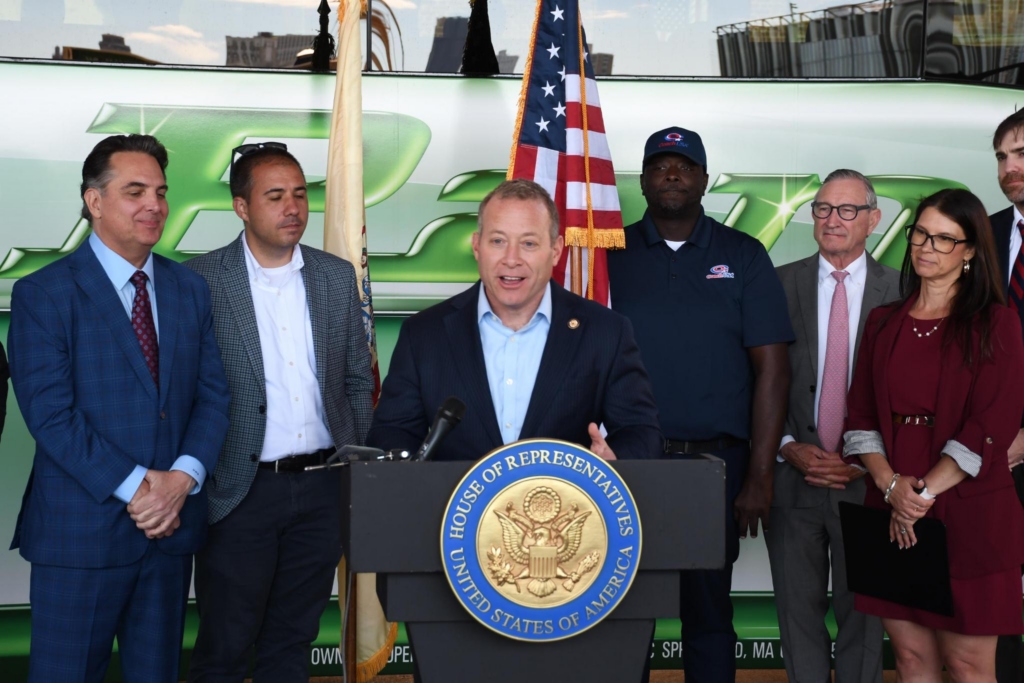
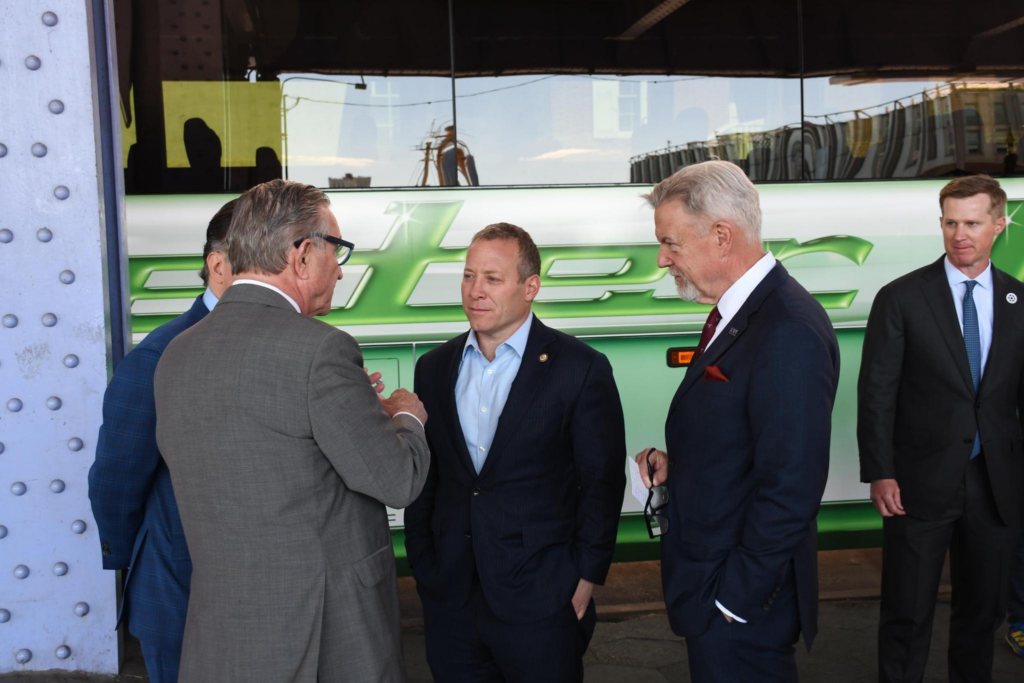
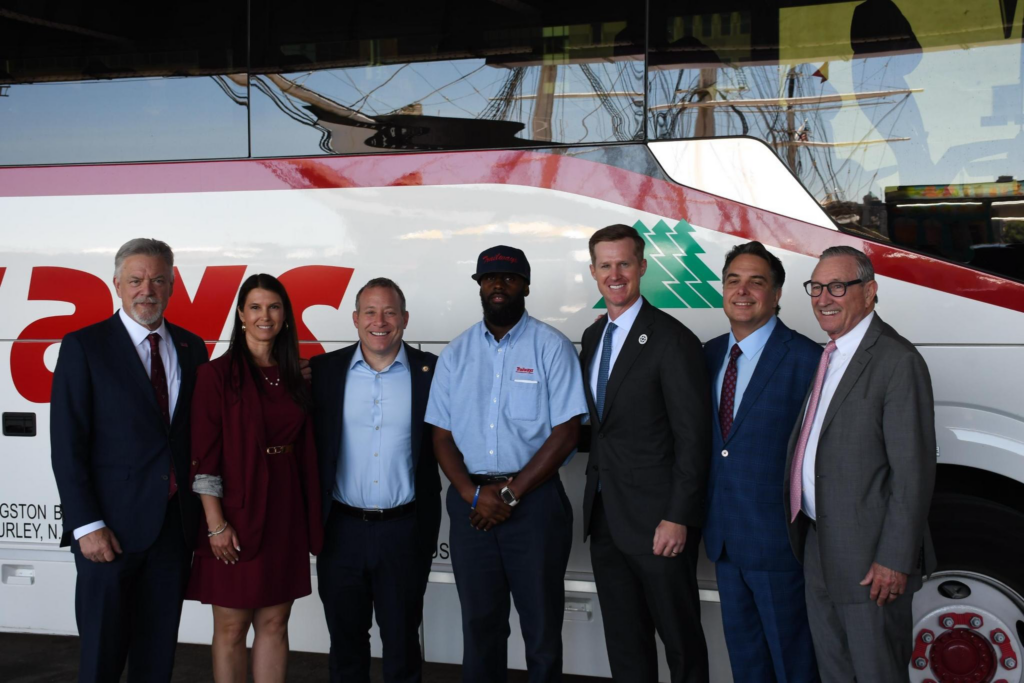
Above: Gottheimer Announces Bipartisan Buses Act.
NEW YORK, NY — Today, U.S. Congressman Josh Gottheimer (NJ-5) joined leaders, bus drivers, and small business owners from the American Bus Association, the Bus Association of New York State, and the Business Council of New York State to announce the bipartisan Buses Utilizing Safety and Environmental Standards (BUSES) Act, introduced this week with Representative Nick Langworthy (NY-23). The bill would establish commonsense federal guardrails for over-the-road bus idling rules and end New York City’s bottom-feeding, bounty-style enforcement program that has weaponized private citizens against bus operators serving seniors, children, and passengers with disabilities.
“This bus idling tax is not just bad policy. It is an offense to every principle of access and inclusion this country stands for. Operators are being put in an impossible position: do the job right and risk a fine, or cut corners on safety to beat an arbitrary clock. No one should ever have to make that choice,” said Congressman Josh Gottheimer (NJ-5).
Gottheimer continued, “In the last five years, the price of motorcoach tickets has increased by thirty-five percent. That’s yet another tax on Jersey families at a time when people are already getting crushed under the cost of living.”
Watch Gottheimer’s Full Remarks Here.
Watch Gottheimer discuss the challenges of current laws with a bus driver here.
“Bus operators, who often travel across state lines and multiple jurisdictions, should not be forced to navigate a confusing maze of conflicting regulations just to do their jobs,” said Congressman Langworthy (NY-23). “This legislation creates a commonsense national standard that protects transportation providers from excessive mandates while ensuring they have the flexibility needed to safely operate, especially in regions where safety, traffic, and weather conditions are a legitimate concern. This bill also rightly puts an end to the disturbing big brother bounty programs that are nothing more than a cash grab.”
Under New York City law, buses and trucks may not idle for more than three minutes in the city or for more than one minute adjacent to a school. The city enforces these rules through the Citizens Air Complaint Program, which pays residents 25% of any fine collected when they report an idling vehicle; residents who file complaints directly with the Office of Administrative Trials and Hearings (OATH) can collect 50%. Fines range from $350 to $2,000 per violation, with companies subject to fines up to $15,000. Some bottom-feeding New Yorkers have turned bus bounty hunting into a full-time profession — the top five earners have collectively pocketed an estimated $3.6 million. Complaints under the program have skyrocketed from 49,000 in 2022 to 124,000 in 2024, with more than 62,000 already filed in 2026 alone — putting 2026 on track to be the biggest year yet for complaints.
The current NYC law makes no clear distinction between a bus sitting idle for no reason and a bus actively serving passengers. In practice, it penalizes operators for basic, legally required operations like federal safety inspections, loading passengers who are elderly or have disabilities, or keeping passengers with health risks cool during extreme heat. The bill is supported by The ARC of New Jersey — a community that advocates for people with disabilities. And it’s supported by JSDD — an organization that advocates for the developmentally disabled.
Since 2020, more than 4,000 summonses have been issued against private bus carriers in New York City, resulting in hundreds of thousands of dollars in fines. Academy Express, a well-regarded Jersey bus operator, was hit with $120,000 in idling fines in a single day. ABA survey data shows the consequences: 35% of affected operators have reduced trips into New York City, 20% have turned down charters, and 10% have stopped operating in the city entirely.
Meanwhile, MTA buses and city vehicles idle on the same streets — without penalty. Private carriers play by one set of rules; the city’s own fleet plays by another.
The bipartisan BUSES Act will:
The bill does not eliminate anti-idling laws, authorize unlimited engine operation, or weaken national air quality goals. It establishes a narrow, reasonable federal standard that distinguishes between unnecessary idling and the limited engine operation required to safely transport passengers.
Motorcoaches are among the greenest passenger vehicles in operation — a single fully loaded coach produces up to 80% less CO₂ per passenger than private vehicles on the same route and takes up to 50 cars off the road. The industry supports nearly 30,000 jobs in New Jersey, with $130 million in wages in NJ-5. In 2024, the motorcoach sector generated a $4.2 billion economic impact in New Jersey and $336 million in output in NJ-5 alone.
“Professional bus operators deserve clear, consistent rules that allow them to focus on safety. The BUSES Act provides the certainty our industry needs while protecting the passengers who depend on motorcoach transportation every day,” said Fred Ferguson, President and CEO of the American Bus Association. “Motorcoaches are already one of the most environmentally responsible group transportation options available. They deliver the lowest carbon emissions per passenger mile while helping relieve congestion by moving more people in fewer vehicles. As policymakers look for safe, efficient ways to expand mobility, buses belong at the center of the solution. We thank Congressman Josh Gottheimer and Congressman Nick Langworthy for their bipartisan leadership on this legislation and for recognizing that safety, mobility, and common-sense national standards can go hand in hand. The BUSES Act gives operators the clarity they need to keep passengers safe, comfortable, and moving.”
“A policy intended to reduce emissions created more emissions. That is not good policy. It is not good for the environment,” said Michelle Petelicki, President, Panorama Tours Inc. & Representative of Greater Northeast Motorcoach Association. “That is exactly why the BUSES Act matters. It recognizes the operational realities of passenger transportation while continuing to support the environmental goals we all share.”
Congressman Gottheimer is also:
Additionally, Gottheimer is a member of the Bipartisan Congressional Bus Caucus and has long championed bus safety, including the Miranda Vargas School Bus Driver Red Flag Act and the SECURES Act requiring three-point seatbelts on school buses.
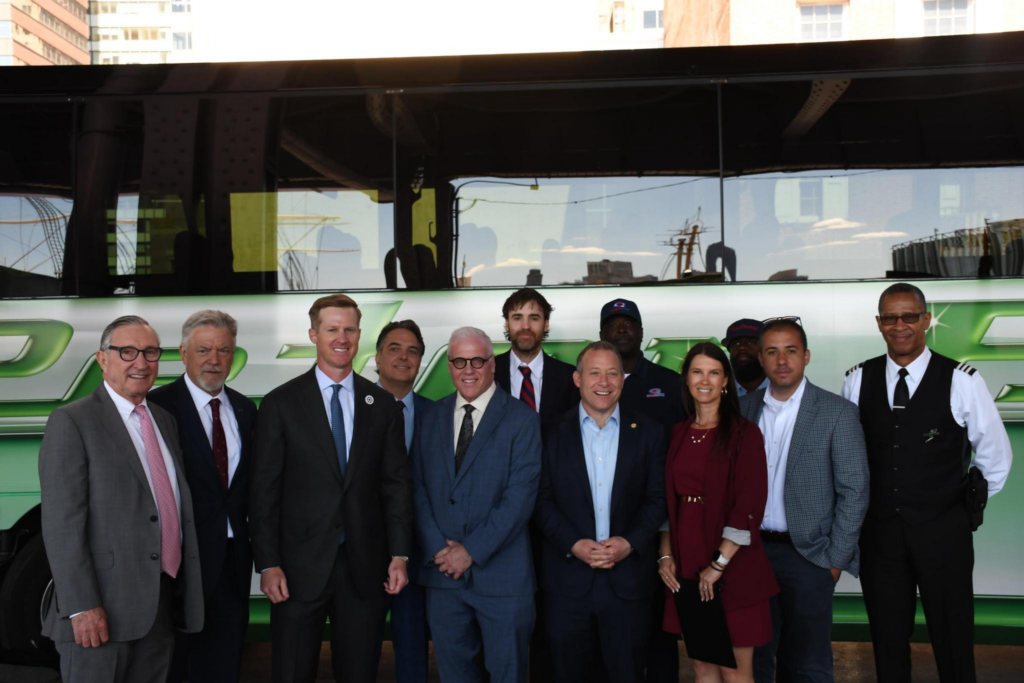
Gottheimer was joined by Fred Ferguson, CEO of the American Bus Association; Glen Every, President of the Bus Association of New York State; Matthew Daus, City University of New York Region 2 Transportation Technology Chair, University Transportation Research Center; Michelle Petelicki, President, Panorama Tours Inc. & Representative of Greater Northeast Motorcoach Association; Steven Coyle, American Bus Association Director of Government Relations; Howard Becker, Vice President of Membership, The Business Council of New York State; Patrick Condren, Bus4NYC Coalition Administrator; Aron Rush, Peter Pan Bus Driver; William Pelzer, Coach USA Bus Driver; Archim Hynes, Trailways Bus Driver; and Mosta Costa, Yankee Lines.
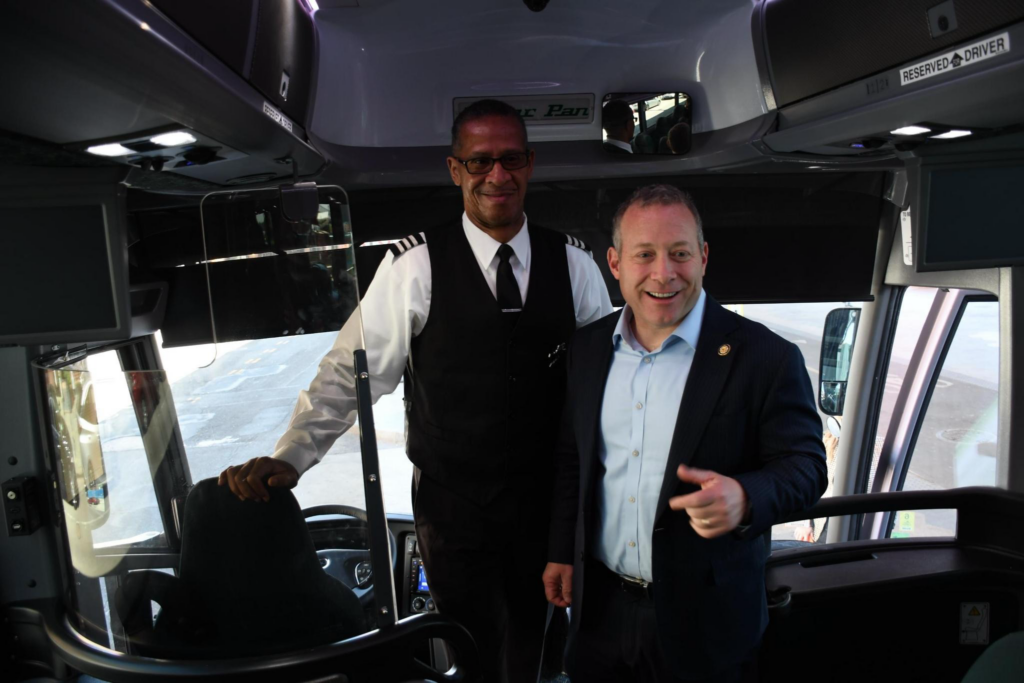
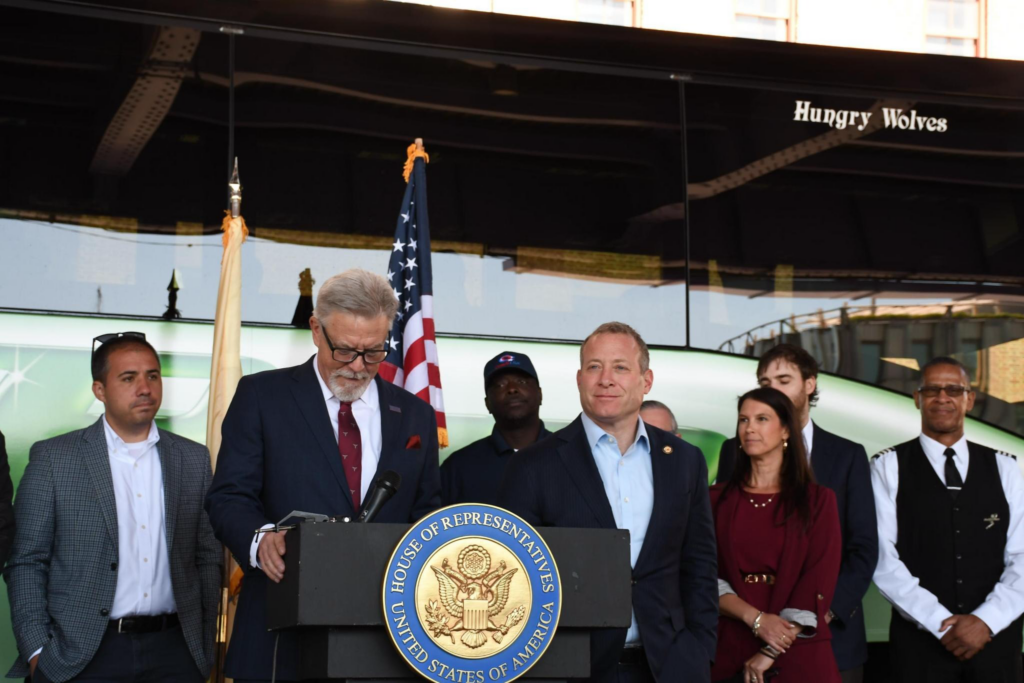
Below: Gottheimer Announces Bipartisan Buses Act.
###
Gottheimer’s remarks as prepared for delivery:
Hi everyone. It’s great to be in New York City after a huge Knicks win — just a few miles from New Jersey — home of the World Cup. I want to start by painting a picture. It is July. It is ninety degrees outside. You are a senior citizen, a child on a school trip, or someone with a heart condition, and you are sitting on a parked motorcoach waiting to depart.
The engine is off. The air is off. The bus is scorching hot — baking in the summer heat and dripping with humidity.
Inside that bus, the temperature is not ninety degrees. It is climbing well past 120 degrees. The roof and dashboard are pushing 150 in direct sunlight. The reason? Simple physics — sunlight pours through the windows, gets absorbed by the seats, the floor, and the dashboard, and converts to trapped heat that cannot get out. It is like a sauna and a steam room combined — and Jersey and New York families, workers, and seniors are sitting inside it. Yes, that eighty-year-old is stuck in there because of some bureaucratic rule.
The engine needs to run to keep those passengers safe. That is not an excuse. That is a medical fact.
So, why are so many bus engines getting shut off? Because here in New York City, if that bus idles for more than just one second — yes, one second — at a bus terminal or three minutes outside on a street like this one, the operator gets hit with a fine or “bus idling tax”. And where does that fine come from? It’s from someone on the street corner who reported it from their phone; they literally recorded it and collected a cash reward after filing a citizen complaint like some sort of bureaucratic bounty hunter. The fine? Up to $15,000 dollars. For just one incident.
You’d think I’m making this up, but I’m not.
That is the reality these bus operators, several of whom are Jersey-based — and standing with me today — are faced with every single day because of NYC’s bus idling tax. It’s definitely a tax on our families and workers. And a tax on seniors and people with disabilities. Why? Because in the end, the people paying the steepest price are not just the operators — they are the passengers. Particularly the ones who need the most protection. Because believe me, those ridiculous fines get passed along to you and Jersey families. The bus companies can’t just eat all of the costs themselves
That means people are getting screwed, leading to higher ticket prices for families and hard-working people.
In the last five years alone, because of the idling tax and things like the NYC Congestion Tax, the price of motorcoach tickets have increased by thirty-five percent. That’s yet another tax on Jersey families at a time when people are already getting crushed by the cost of things like food prices, energy costs, and childcare.
Let’s go back to that one-second or three-minute rule. Think about what it actually takes to get a passenger in a wheelchair onto a bus.
The engine has to be running. That’s what keeps the battery on the lift charged. It’s what keeps the bus safely in park, with the emergency brake set. And, without it, many wheelchair lifts simply won’t operate. The ramp won’t lower. The air conditioning won’t run — and for a passenger with a respiratory or cardiovascular condition, that air conditioning isn’t a luxury. It’s a medical necessity.
So, before the bus has served a single passenger, the clock is already running on a three-minute idling limit, making drivers constantly worried about this “bus idling tax” instead of ensuring a bus is safe for the thirty to fifty passengers who will be riding it.
Now, think about how long it appropriately takes to get an elderly person onto a bus, or a person with a disability, and you understand how absurd this rule is.
Under current New York City law, each day, motorcoach buses are being fined thousands of dollars while safely trying to load passengers or utilize wheelchair lifts for disabled passengers. It is a bounty system. And it is time to call it what it is.
The law does not have a clear distinction between a bus sitting idle for no reason and a bus actively serving a passenger with a disability.
There’s not one bit of daylight between the two, leading to fines and adjudication being left up to the person who processes the case at NYCDEP.
Here is how it works. The city’s “Citizens Air Complaint Program” pays residents — these bottom feeders — 25% of whatever fine is collected when they report an idling vehicle by taking a video and submitting it to the Office of Administrative Trials and Hearings. Fines range from $350 to $2,000 per violation. But companies can be fined up to $15,000. And the companies — do they fight this? No. It costs more for lawyers, and they don’t want to mess with the city that holds their licenses.
This bus idling tax is a Ponzi scheme with a bunch of bottom feeders running around the city with cameras to stick it to hard-working bus drivers who are just trying to do right by their passengers. It’s a disgrace, and the socialist Mayor Mamdani supports the whole thing. Who pays? You do. Hard-working New Yorkers and Jersey folks just trying to make ends meet. Again, these costs get passed on to families through higher ticket prices. This is socialism at its finest.
Some people have turned this into a very profitable full-time occupation. According to the NYCDEP, the top five bus bounty hunters — or bottom feeders — in this program have collectively pocketed an estimated combined $3.6 million.
And, the fines that paid those rewards came almost entirely out of private bus operators just trying to get people to work, school, or see their loved ones because of this ridiculous bus idling tax.
This is not a small side hustle for a handful of people. The number of complaints filed under this program has exploded — from 49,000 in 2022 to 124,000 in 2024.
So far in 2026 alone, there have already been more than 62,000 complaints, putting this year on track to be the biggest yet. Something that my friend Mr. Mamdani is quite proud of! He said companies have, and I quote, “illegally forced New Yorkers to breathe in their exhaust. We are going to collect every dollar they owe the people of this city”
Why get a real job when you can just run around the city taking videos of bus drivers helping people with disabilities onto buses? Or a driver concerned about passengers overheating on their bus.
One operator — Academy Express, a well-regarded, Jersey-based company — was hit with $120,000 in idling fines in just a single day. A single day.
This arbitrary idle law is not only another transportation cash grab for bureaucracy-loving socialists in NYC, just like the Congestion Tax is, but it also poses serious safety concerns and hurts our commuters, small businesses, and families.
New Yorkers will remember when the city rolled out the MTA’s Congestion Tax and sold it as a breakthrough for clean transit. We have seen this pattern before with the Congestion Tax: environmental language used as cover for what is, at its core, a revenue scheme targeting private businesses on the backs of Jersey.
Another reason this is BS — MTA buses idle. City vehicles idle. But they don’t get any summonses. Private carriers have to play by one set of rules; the city’s own fleet plays by another.
More than four thousand summonses have been issued against private bus carriers since 2020 — costing the industry hundreds of thousands of dollars in fines, on top of mounting legal costs.
And the ABA’s data shows what the result is: roughly thirty-five percent of affected operators have cut trips into New York City. About ten percent have stopped operating in the city altogether.
The current tax is crushing Jersey and the bus industry — and it makes no sense. And it’s hurting NYC tourism.
Every day, an estimated twenty to thirty thousand passengers ride private motorcoaches, charter buses, and hop-on, hop-off tours through New York City — accounting for millions of visits a year of people going to work and school, to see family, to see the city as tourists — and to even see the World Cup, including Game 2 being played today in Jersey!
These arbitrary rules and bus idling tax also jeopardize the safety of the passengers. Before a motorcoach pulls out of any stop, federal law from the U.S. Department of Transportation requires the operator to complete a full pre-trip safety inspection.
We are talking about brake systems, air pressure tests, steering mechanisms, exterior lighting, tires, emergency exits, windshield defogging, the wheelchair lift, and more. Done right, per FMCSA regulations, that inspection takes fifteen minutes for experienced drivers but can take up to thirty minutes for new drivers.
Again, the rule is one second or three minutes — not 15 minutes. So this rule goes after people with disabilities, those with breathing issues, and, given these safety provisions, also puts every rider in jeopardy.
So, right now, operators in New York City are being put in an impossible position: do the job right and risk a fine, or cut corners on safety to beat an arbitrary clock.
No one should ever have to make that choice.
That’s why, today, I am proud to announce new bipartisan legislation, the Buses Utilizing Safety and Environmental Standards Act — the BUSES Act. I’m introducing the bill this week with my colleague, Representative Langworthy of New York. It’s supported by The ARC of New Jersey — a community that advocates for people with disabilities. And it’s supported by JSDD — an organization that advocates for the developmentally disabled.
This bipartisan legislation does three things. First, it establishes a federal floor of no less than fifteen minutes for idling restrictions on over-the-road buses — enough time to complete a proper safety inspection, lower a wheelchair lift, help a senior onto the bus, and keep passengers from baking in a 120-degree cabin.
It ends the bounty-style, bottom-feeding enforcement mechanisms that have turned New York City’s streets into a revenue hunting ground. And, it stops fraudulent Clean Air Act citizen suits from being weaponized against operators for what are basic operational necessities.
This bill does not eliminate anti-idling laws. It does not authorize unlimited engine operation. It does not weaken national air quality goals. What it does is establish a narrow, commonsense federal standard that distinguishes between a bus sitting idle for no reason and a bus doing exactly what it is supposed to do, and stop this absurd bus idling tax.
Now, I want to be clear. This bill doesn’t undermine clean air. The motorcoach industry has one of the best environmental records of any transportation mode in the country — a single fully loaded bus produces up to 80% less CO₂ per passenger than private vehicles on the same route. One of them takes fifty cars off the road. These are among the greenest passenger vehicles in operation.
A single fully occupied coach bus can remove up to 20 to 50 private passenger cars from the road. This directly alleviates highway traffic, lowering the amount of engine idling and emissions from backed-up vehicles, and by replacing dozens of personal vehicles, motorcoaches decrease the overall number of tires on the road, lessening microplastic pollution and reducing the need for frequent road repairs and new highway construction.
Second, I’m also sending letters to the U.S. Department of Justice and the U.S. Department of Transportation asking them to formally study the impact of these zero-to-three-minute rules on Americans with disabilities. According to DOT data, approximately 10 million Americans between the ages of 18 and 64 — and nearly 8 million seniors — report travel-limiting conditions. They deserve to know their government is protecting them, not exposing them to risk for the sake of a citation. We need to know how the current law impacts our most vulnerable.
Finally, I’m writing to the Chairman and Ranking Member of the House Energy and Commerce Committee, urging them to move this bill through markup and bring it to the floor with bipartisan support. Fred Ferguson, the President & CEO of the American Bus Association, who is here with us today, testified before that committee’s Subcommittee on Environment just two weeks ago. The groundwork is laid. We need to get this moving this summer. With a hopeful markup coming up, I am calling on my colleagues to support this commonsense legislation.
The motorcoach industry supports nearly 30,000 jobs in New Jersey alone — more than $130 million in wages right in my Fifth Congressional District of New Jersey. These are small businesses. Family businesses. Businesses that evacuated people to safety during Hurricane Sandy. Businesses that got no major bailout during COVID, and watched New Jersey lose 61% of its motorcoach companies, a higher rate than anywhere else in the country.
They have earned a fair shot. And the passengers they serve — the seniors, the children, the travelers with disabilities — deserve to be treated with dignity, not used as leverage in a fine collection scheme.
The BUSES Act is common sense. It’s bipartisan. Nothing political about it. It is long overdue. And we are going to get it done.
In the greatest country in the world, if we work together, stop this bus idling tax and keep fighting to protect the people who are most at risk and sticking it to NYC, I know that our best days will always be ahead of us.
Thank you.