Oct 16, 2026
Uncategorized
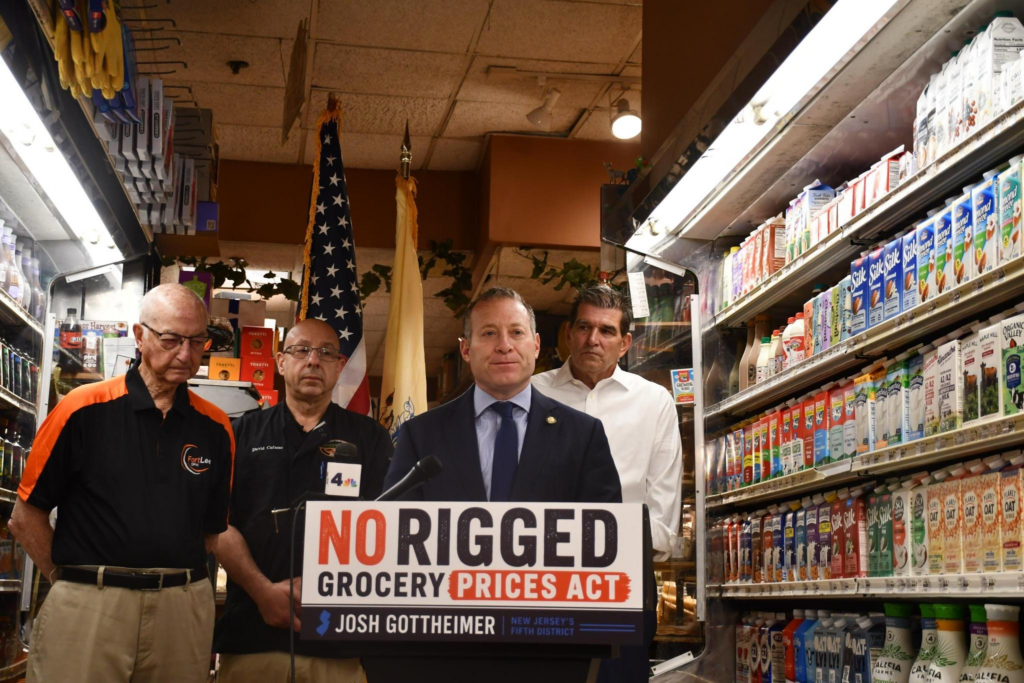
Above: Gottheimer announces No Rigged Grocery Prices Act.
FORT LEE, NJ — Today, May 18, 2026, at Cafasso’s Fairway Market in Fort Lee, U.S. Congressman Josh Gottheimer (NJ-5), Co-Chair of the Democratic AI Commission, announced the No Rigged Grocery Prices Act, new bipartisan legislation to protect consumers from AI-powered surveillance pricing at grocery stores and third-party grocery delivery platforms. Gottheimer is introducing the bill with Republican co-lead Congressman Mike Lawler (NY-17).
“Two people standing in the same store, buying the exact same item, at the exact same time could be paying two different prices based on what they’ve told their chatbot. Why? Because an algorithm decided one of them could afford more,” said Congressman Josh Gottheimer (NJ-5).
Gottheimer continued, “Imagine a mom whose kids love oranges. She buys them every single week. The algorithm sees that, knows she’ll pay whatever it charges, and quietly jacks up her price. That’s not innovation. That’s not efficient. That’s just downright wrong. That’s why my new legislation is so important, to help protect hard-working families.”
Watch Gottheimer’s Full Remarks Here.
Groceries are up more than 18 percent since January 2022, with beef, coffee, and tomatoes all up by double digits in the past year alone.
The bill comes after Instacart was caught changing prices on products customers ordered online, charging some shoppers up to 23 percent more for the exact same item, at the exact same store, at the exact same moment. For a family of four, that amounts to roughly $1,200 more per year. The Federal Trade Commission opened a formal investigation, state attorneys general in New York and California launched their own probes, and, in a separate case for other deceptive practices, Instacart was hit with a $60 million fine.
As families across North Jersey continue to feel the squeeze of rising costs, Gottheimer warned that AI surveillance pricing threatens to make things even worse. Using vast amounts of personal data, companies can deploy AI systems to identify the highest price each individual shopper will pay and charge them accordingly, meaning two people standing in the same store, buying the exact same item, at the exact same time, could pay two very different prices. That’s why Gottheimer is introducing his new bipartisan bill to stop grocers from being able to target families and increase prices.
The bipartisan “No Rigged Grocery Prices” Act would:
The legislation still allows AI to be used for discounts, promotions, loyalty programs, and rewards programs that help consumers save money.
Gottheimer’s Other Actions to Protect Jersey Families:
The “No Rigged Grocery Prices” Act builds on momentum at the state level. Maryland recently passed the Protection From Predatory Pricing Act, the first state law to ban companies from using personal data to raise prices. In New Jersey, State Senator Joe Lagana is advancing the Fair Price Protection Act in Trenton.
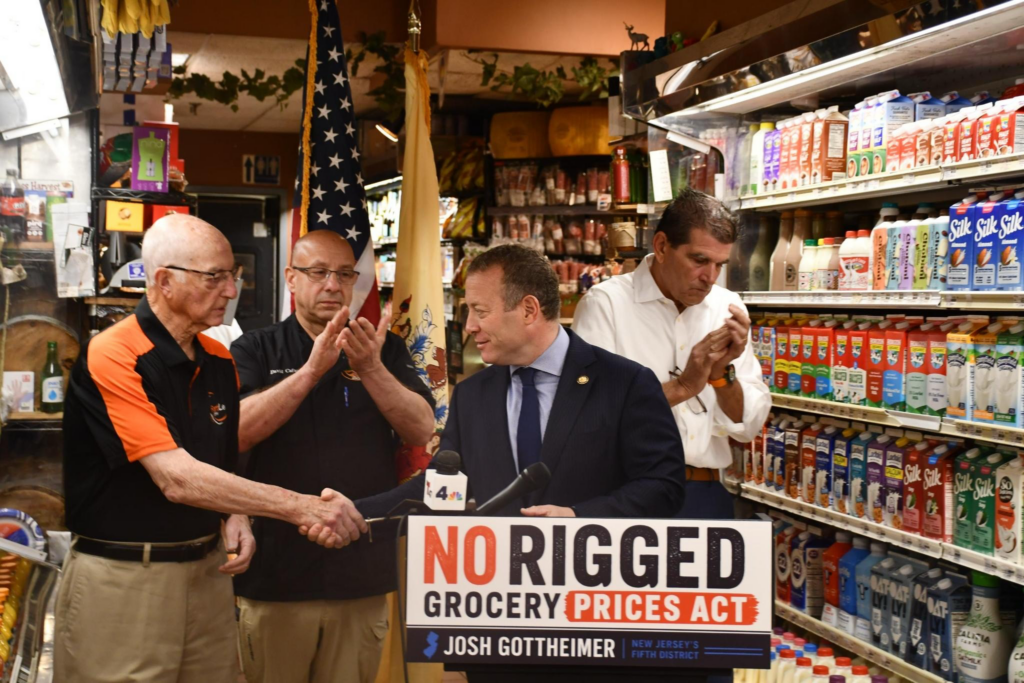
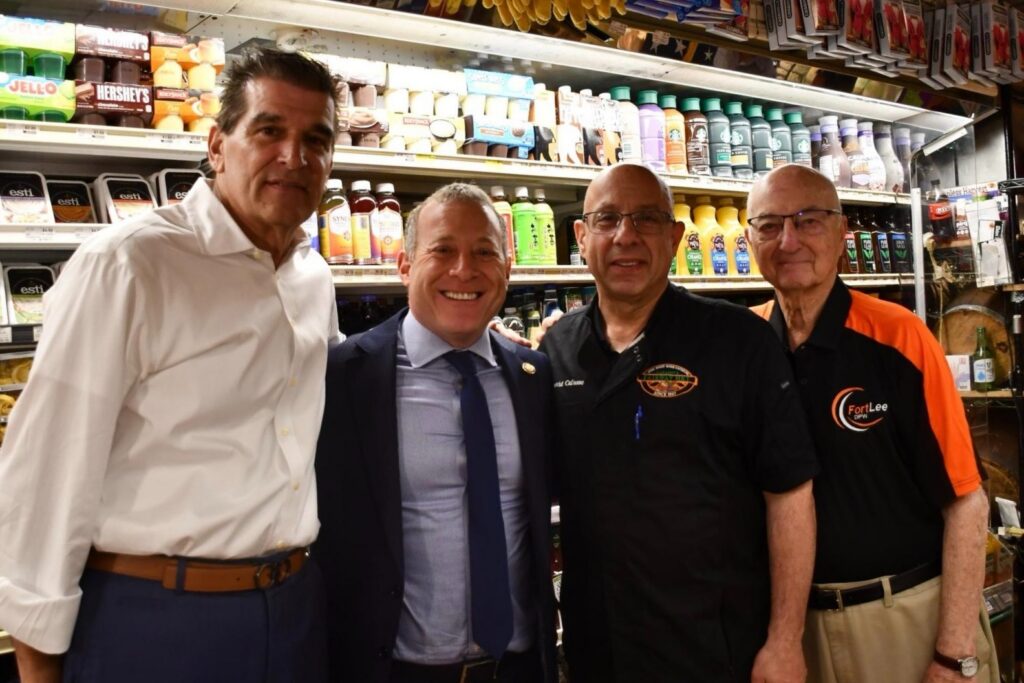
Gottheimer was joined at today’s announcement by Fort Lee Mayor Mark Sokolich, Fort Lee Councilman Harvey Sohmer, and David and Maria Cafasso of Cafasso’s Fairway Market, whose family has served the Fort Lee community for nearly a century since Umberto and Marianna Cafasso founded the store in 1927.
“Republicans, Democrats, and everyone in between understand that the price on the shelf should be the same regardless of who is standing in front of it, ”said Congressman Josh Gottheimer (NJ-5).
Below: Gottheimer announces No Rigged Grocery Prices Act.
Read Gottheimer’s Full Remarks Below:
Good morning, everybody, and thank you all for being here. And thank you to Cafasso’s for welcoming us today, and for everything you do to serve families here in Fort Lee.
Cafasso’s Fairway Market was founded almost one hundred years ago by Umberto and Marianna Cafasso . What started as a “mom and pop” business has become a staple of North Jersey. But, it still does what it always has, serve neighbors and families. Like so many small businesses across North Jersey, and most families, they’re working harder than ever just to keep costs down and stay afloat under ever-rising costs. They feel the pressure every single week.
Look around. You can see why. It’s at every grocery store. Grocery prices are up more than eighteen percent since January 2022. Beef, coffee, tomatoes — all up by double digits in just the last year.
Now more than ever, families are trying to stretch every dollar they can. Seniors on fixed incomes are carefully counting every nickel. Working parents are balancing record utility and grocery bills, gas prices, and child care costs, rent, and taxes. So, the last thing families need right now is a new technology, driven by AI, that figures out a way to stick it to them when they walk into the grocery store, or order food online, and send those prices even higher.
That’s not some sci-fi, Jetsons far away idea. It’s actually happened, and we need to do everything we can to stop what’s called surveillance pricing.
Let me give you a real-world scenario. You walk into a grocery store after spending the night searching for recipes on ChatGPT, Claude, Grok, or Gemini. They know you need brown sugar for the cake you’re baking. Here comes the problem. If your grocery store recently installed electronic pricing tags on their shelves, and knows from your AI searches that you just walked in looking for that key ingredient, it could then charge you $2 more than the next person walking down the aisle who is casually shopping. In essence, the grocery store starts surveilling you and charges you what it thinks it can get from you. That’s not good.
Now, I’m not talking about coupons and discounts. They can do that all day long. I’m talking about knowing it’s you from AI and then using that technology to have some sort of surge pricing, to charge you more, like what Uber does to you when it’s raining. Think about what that actually means. Two people, standing in the same store, buying the exact same item, at the exact same moment — paying two different prices based on what they’ve told their chatbot. Why? Because an algorithm decided one of them could afford more.
Imagine a mom whose kids love oranges. She buys them every single week. The algorithm sees that, knows she’ll pay whatever it charges, and quietly jacks up her price. That’s not innovation. That’s not efficient. That’s just downright wrong.
Surveillance pricing, powered by AI, could also charge you more when you get your groceries delivered from Amazon, Walmart, Albertsons, and FreshDirect, like lots of families do every week. Thanks to your chatbots, they know lots about you, from what you can afford to your schedule to what your neighbors are willing to pay for food.
You might be saying – no way. Just recently, Instacart got caught red-handed doing exactly this. They were changing prices on the products customers were ordering online — charging some shoppers up to twenty-three percent more for the very same item, at the very same store, at the very same moment. For a family of four, that’s about twelve hundred dollars a year — straight out of their pocket.
And, when they got busted, caught red-handed, the response was loud and bipartisan: members of Congress on both sides of the aisle demanded answers. The Federal Trade Commission opened a formal investigation. State attorneys general in New York and California launched probes of their own. And, in a separate case for other deceptive practices, Instacart was hit with a sixty-million-dollar fine.
The idea is simple: companies collect huge amounts of personal data about all of us. They’re tracking what we buy, where we shop, what we search for online, where we travel, the financial and medical questions we ask, and even major life events. Then they have AI systems analyze that information to determine the highest price they think each person will pay.
And that’s what brings us here today. We need to ensure that as AI becomes a bigger part of our economy and our everyday lives, it actually helps us – it can’t be used to hurt families and consumers.
That’s why I’m proudly introducing new bipartisan legislation, the No Rigged Grocery Prices Act, so that AI isn’t allowed to jack up the prices you pay for groceries when you go to the store or have them delivered at home. No more surveillance pricing.
Our bipartisan bill that I’m leading with New York Republican Congressman Mike Lawler will do three things.
First, it will prevent grocery stores and grocery delivery apps from using your AI-driven personal data to charge you more than the person standing next to you or your next-door neighbor. No electronic shelf pricing suddenly changes when you walk up to it. Second, it will require clear disclosures whenever prices legitimately change — for items sold by weight, for example, or when supply runs short. No random surges or changes just because you can pay more. It will also still allow for discounts and promotional pricing. That’s not a problem. It’s when they try to screw you with higher prices because they can.
And third, the No Rigged Grocery Prices Act will stop AI chatbots from randomly substituting something you ordered with something you didn’t order – think switching in generic store-branded frosted Mini Wheats instead of the real thing, without getting your permission. I hate that.
Importantly, again, my bipartisan legislation will allow AI to help with discounts, promotions, loyalty programs, and rewards programs that genuinely help consumers save money. But it will stop surveillance pricing.
Don’t get me wrong — with the appropriate protections, AI has enormous potential. It can transform health care by finding new cures to cancer and help government operate more efficiently, like helping you avoid the DMV. But like every powerful new technology before it, AI needs common sense guardrails and worker protections to make sure it’s being used to lift families up, not squeeze them dry. Technology should support workers and consumers alike, not leave them behind.
That’s why I’m also sending a letter to the Department of Labor, calling on them to investigate the impact that electronic shelf labels could have on American jobs. We must protect workers who might be affected by any emerging AI technologies.
We’re also asking tough questions about the next generation of AI shopping tools. I’m sending a letter to the major grocers and food delivery apps: Amazon, Albertsons, Costco, Kroger, Walmart, Uber Eats, DoorDash, and Instacart, asking them how they are using AI to set prices and whether they will commit to staying away from setting higher prices based on personal data.
As more people rely on AI to help make purchases and compare prices, families deserve to know how companies are using their personal and sensitive data to raise their bottom line.
I want to be clear. This legislation is not about stopping innovation or preventing businesses from operating efficiently. It’s about making sure innovation works for families instead of exploiting them. Consumers shouldn’t have to wonder whether an AI system is quietly charging them more because of what it knows about their lives.
And at the end of the day, this is a common sense issue. Republicans, Democrats, and everyone in between understand that the price on the shelf should be the same regardless of who is standing in front of it. The good news is that states across the country are already taking steps to address this. Maryland led the way with the Protection From Predatory Pricing Act, the first state law to ban companies from using personal data to jack up prices. Our bill builds on that foundation.
Here in Jersey, my good friend State Senator Joe Lagana is leading the same fight in Trenton with his Fair Price Protection Act, and other members of Congress like Frank Pallone are asking the right questions.
We all know people in Jersey are smart. They understand sales, coupons, and discounts. What they don’t support is a possible secretive AI system deciding that one family should pay more simply because an algorithm thinks it can get away with it.
The goal here is simple: we want AI to help people, not exploit them. We want technology that lowers costs, improves service, and creates opportunity. But we also want strong guardrails that keep Jersey Families from getting screwed over.
Companies developing these technologies need to put consumers first.
Because Jersey families work too hard to be charged more simply because an algorithm thinks they can afford it.
Not on our watch.
In the greatest country in the world, I know that if we work together, our best days will always be ahead of us.
Thank you, and God bless.
Credentialed media with questions should contact Haraden@mail.house.gov and Yael.Velvel@mail.house.gov.
###