Oct 26, 2026
Press
Presses for Passage of Key Bipartisan Legislation
Increased Funding for Public Education, Awareness, Research, Funding
Congressman Hears Directly from North Jersey Experts, Patients, and Community Leaders
New Jersey Ranks Fourth in the Nation for Lyme Disease Cases

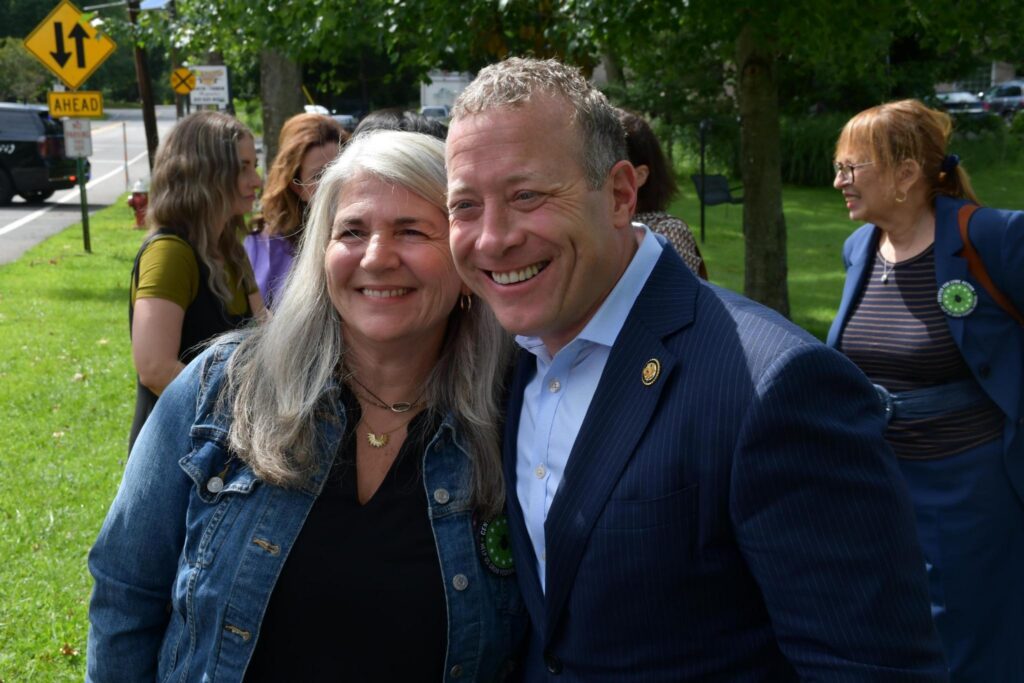
Above: Gottheimer hosts roundtable on tackling Lyme disease.
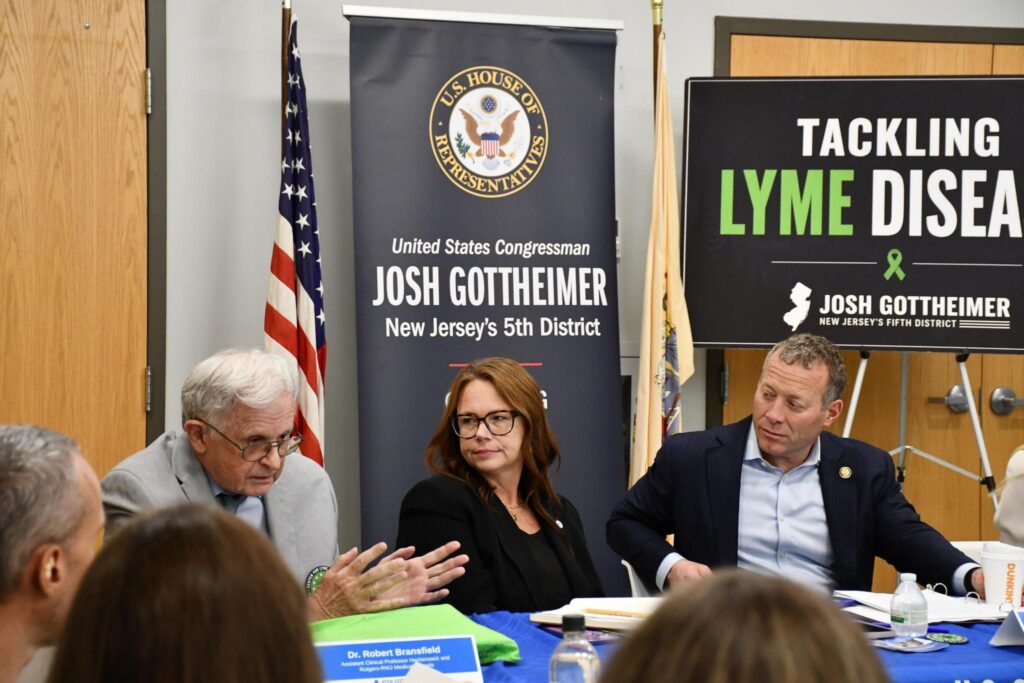
HAWORTH, NJ — Today, July 30, 2026, U.S. Congressman Josh Gottheimer (NJ-5) hosted a Lyme disease roundtable at the Haworth Library, sitting down with local officials, medical experts, and advocates to confront the growing threat of Lyme and other tick-borne illnesses facing families across New Jersey.
Watch full remarks here.
“There is nothing partisan about a tick bite. This isn’t a Democratic issue or a Republican issue — it’s a Jersey families issue,” said Congressman Josh Gottheimer (NJ-5). “Whether you’re hiking the Appalachian Trail, playing in your backyard, or just walking the dog around the block, you deserve to do that without worrying about a disease that can follow you for years.”
“Vector-borne diseases, including Lyme disease, have real impacts on public health in all of our communities. It is so important that we continue to support sustained efforts to keep the public informed of their risk of contracting these diseases, and to further our understanding of these infections — the ways in which they cause the disorders they do, and how best to diagnose and treat them,” said Dr. John Halperin of Atlantic Health.
Lyme disease is the most common disease transmitted from animals to humans in the country, with an estimated 476,000 cases nationally every year, and New Jersey ranks fourth in the nation for reported Lyme disease cases. In 2026 alone, the state has already reported more than 4,000 tick-borne disease cases — over 3,500 of them Lyme disease — according to the New Jersey Department of Health. Since 2010, New Jersey has averaged nearly 4,800 Lyme cases per year. Bergen, Passaic, and Sussex Counties alone have averaged nearly 800 combined cases annually.
Roundtable participants raised the urgent need for greater public awareness, the difficulty of getting an accurate diagnosis, the prevalence of false negatives, and the need for better physician education on Lyme and related tick-borne illnesses such as anaplasmosis, babesiosis, and alpha-gal syndrome. Participants also highlighted the long-term physical, cognitive, and mental health impacts on children whose Lyme disease goes undiagnosed for too long.
Gottheimer outlined priorities he is advancing in Washington to address these concerns:
Gottheimer also urged residents to take precautions this summer: using repellents, wearing proper clothing, checking themselves and their pets for ticks, and watching for a red bullseye rash, especially after spending time in wooded or grassy areas, and following up with a doctor if a rash or fever develops in the weeks after a possible bite.
Gottheimer was joined by Haworth Councilwoman Alanna Davis; Matt Bickerton, Bergen County Health Department; Joseph Dolan, National Society of Professional Surveyors; Matthew Marinello, Atlantic Health; Dr. John Halperin, Atlantic Health; Dr. Mohini Gurme, Medical Director of Neurology at One Bergen Health; Allana Davis; Dr. Rosalie Greenberg, Child & Adolescent Psychiatrist; Steven Hafif; Melissa Rowe, Executive Director, Central New York Lyme and Tickborne Disease Alliance; Heather Zampino; Samantha Sloves; Olivia Abrams, Founder of TiCK MiTT; Kurt Borowsky; Dennis Sullivan; Ellen Allen; Susan Eisen; Jim McCabe; Sally Goodgold; David Butler, Whitney Klein; Susan Fuhr; Dr. Nicole Anderson; Sofia Ciminello, CLA Fellow; Lisa-Jae Eggert; Dr. Robert Bransfield, Assistant Clinical Professor Hackensack and Rutgers-RWJ Medical School; Alissa Johnson; Gloria Kim.
Below: Gottheimer hosts roundtable on tackling Lyme disease.
Gottheimer’s remarks as prepared for delivery:
Good afternoon, everybody. Thank you all so much for being here today at the Haworth Library, and thank you to all of those who sat with me to talk through something that’s affecting so many families right here in North Jersey: Lyme and other tick-borne diseases.
I want to start by saying thank you to our experts, leaders, and participants in today’s roundtable. The stories you shared today, the questions you asked, the recommendations you made, the frustrations you brought forward — that’s exactly why we’re here.
This isn’t an abstract issue for the people here today, or for far too many across our state and country. This disease is personal for many, including myself. I’ve watched family members struggle with the disease for decades. One of my wife’s closest friends faced years of debilitating symptoms, as well.
And I know so many of you in this room, and so many families across Jersey, have gone through the same thing.
While we are fortunate to have these beautiful places where people can enjoy the outdoors, go for a hike, and barbecue with friends — and that’s one of the great gifts of our state and my district here in Northern New Jersey — we must also be careful, stay alert, and protect against what’s lurking in the grass and trees: the legitimate threat of ticks and the diseases they can carry, including Lyme disease.
Let’s talk about the scope of the problem, because the numbers are stunning. Lyme disease is the most common disease transmitted from animals to humans in the entire country. Nationally, we’re looking at an estimated 476,000 cases every single year. New Jersey ranks fourth in the nation for reported Lyme disease cases. In 2026 alone, our state has already reported more than 4,000 tick-borne disease cases — over 3,500 of them Lyme disease — according to the New Jersey Department of Health, and 1,275 tick-related emergency department visits.
Since 2010, New Jersey has averaged nearly 4,800 Lyme cases every year. And here in North Jersey, Bergen, Passaic, and Sussex Counties alone have averaged a total of nearly 800 Lyme cases a year.
That’s not a small problem. That’s an epidemic hiding in plain sight, in our parks, on our trails, and right in our backyards. While ticks are small, these pests can carry dangerous diseases that pose severe risks to the health and safety of our families.
Now, today, we heard directly from you all about what that looks like on the ground. We heard about the need for greater public awareness, teaching families how to spot a tick early and just how prevalent this disease really is right here in Jersey. We heard about the diagnosis problem: how hard it is to get an accurate test, and how many people get a false negative before they ever get the right answer.
We heard about the need for better physician education, because too many doctors still aren’t trained to recognize Lyme disease or the other tick-borne illnesses that ride along with it — things like anaplasmosis (an-uh-plaz-MOH-sis), babesiosis (buh-bee-zee-OH-sis), and alpha-gal syndrome. And we heard about the need for continued investment in research and innovation — to improve diagnostics, strengthen prevention, and better understand the long-term impacts of Lyme disease. And we talked about our kids, about the long-term physical, cognitive, and mental health impacts when a child’s Lyme disease goes undiagnosed for too long.
Every single one of those concerns is real, and I want to walk you through the three things I’m focused on right now to crush Lyme disease and protect our children and families from tick-borne illnesses. As a member of the Congressional Lyme and Tick-Borne Disease Caucus, I am on the front lines of this issue on Capitol Hill — and always listening for what I can best do to help.
First, just last week, a bipartisan bill I’ve long been championing, the Kay Hagan Tick Act, passed the House overwhelmingly. This bipartisan legislation establishes the federal government’s national strategy on Lyme disease. That means funding for research, surveillance, physician education, and public awareness all across the country for the next five years. That’s a huge win.
But a bill won’t help a single family in this room until it becomes law, and that means getting it through the Senate. So right now, I’m pushing hard to get the Senate to pass this bill and send it to the President’s desk to become law. We cannot let a bipartisan bill that sailed through the House overwhelmingly sit around and die because the Senate didn’t get to it. That’s priority number one: to make it law.
Second, I’m working directly with my colleagues in Congress on the Appropriations Committee to surge investments into this fight. My budget requests this year asked for Lyme and tick-borne disease funding for NIH research through the National Institute of Allergy and Infectious Diseases, or NIAID, CDC prevention and education, and the Department of Defense’s Tick-Borne Disease Research Program. Here’s the good news: we secured $5 million for the LymeX Innovation Accelerator, a public-private partnership accelerating the development of new Lyme disease diagnostics and treatments.
Here’s what makes that funding and this fight so important right now. While we’ve been working to build this up, the administration has been trying to slash funding for these programs and has proposed reorganizing the CDC’s dedicated Lyme Disease Program and consolidating it into the broader Vector-Borne Disease Program. Since 90% of vector-borne diseases are caused by ticks, combining both programs means 90% of those resources may not actually go toward tick prevention and research. That would be a disaster.
The administration has proposed $3.8 million in cuts. Consolidating these programs and cutting funding isn’t streamlining anything; it’s just making sure fewer dollars go where they’re needed most. We’re fighting it and pushing to go in the other direction. So I’m speaking to my colleagues, member by member, to ensure Lyme research and prevention get what they actually need to keep Jersey families safe and informed.
Third, I’m doing a full-court press on the bills I’ve been championing in Congress, because these aren’t just ideas — they’re common-sense, bipartisan solutions ready to go. My Tick Identification Pilot Program Act, which I’m co-leading with Congressman Tom Kean of New Jersey, will fund state programs that let you snap a photo of a tick, submit it, and get an answer back from an expert within 72 hours on what kind of tick it was, what the risk is, and what to do next.
My Stamp Out Lyme Disease Act, with Congressman Don Bacon of Nebraska, will direct the Postal Service to issue a Lyme disease research stamp, with every dollar raised going straight to the NIH’s National Institute of Allergy and Infectious Diseases to fund new research and innovation.
My Battling Infections Transmitted by Ticks and Exposure Act, or BITE Act, with Congressman Tom Kean of New Jersey, will build the first fully integrated national vector-borne disease prevention and alert system in the world. It will combine expert tick identification, AI-powered early warning alerts, insurance and emergency room surveillance to catch outbreaks faster, and public education in our schools and communities — cutting Lyme disease cases by 25 percent by 2035.
I’m also backing other efforts, including the Children Inflicted by Lyme Disabilities Act, which would expand special education protections to children with Lyme and other tick-borne diseases; the TICK Act, to strengthen federal research and prevention efforts to combat Lyme and other tick-borne diseases, including anaplasmosis (an-uh-plaz-MOH-sis), babesiosis (buh-bee-zee-OH-sis), and ehrlichiosis (air-lih-kee-OH-sis), among others; and the Alpha-gal Allergen Inclusion Act, to classify alpha-gal as a major food allergen.
This fight takes an all-hands-on-deck approach, and that’s exactly what we are doing to keep our families safe. We need to use every tool in the toolkit.
Finally, and consider this the PSA of the day, here’s what you can do to protect yourself.
When you go for a hike or even to the beach — yes, they are on the beach — always check yourself after a walk or a day outside, especially if you’ve recently spent time in a wooded or grassy area.
Use repellents that contain DEET or picaridin, wear proper clothing, like long-sleeve shirts and long pants, and tuck your pants into your socks. Consistently check yourself and your pets for ticks, especially in warm, hidden places like armpits, scalp, and behind your ears. If you do see a tick, remove it with tweezers by grabbing close to your skin and pulling in one smooth motion, and thoroughly wash the affected area with soap and water. If you see a red bullseye rash develop on your skin, take a picture with the rash next to a ruler and reach out to your doctor.
I think one thing is clear: there is nothing partisan about Lyme disease. This isn’t a Democrat issue or a Republican issue. This is a Jersey families issue. Whether you’re hiking the Appalachian Trail, playing in your backyard with your kids, or just walking the dog around the block, you deserve to do that without worrying about a disease that can follow you for years.
Working together, we will beat Lyme disease.
I want to thank everyone in this room again, and I want to thank our partners at the Center for Lyme Action, local hospitals and doctors’ offices, and medical professionals for the incredible work you do every single day fighting for patients and families.
If we keep working together and fighting to protect our Jersey families, in the greatest country in the world, our best days will always be ahead of us.
Thank you, and God bless you and your families.
###