Sep 30, 2026
Press
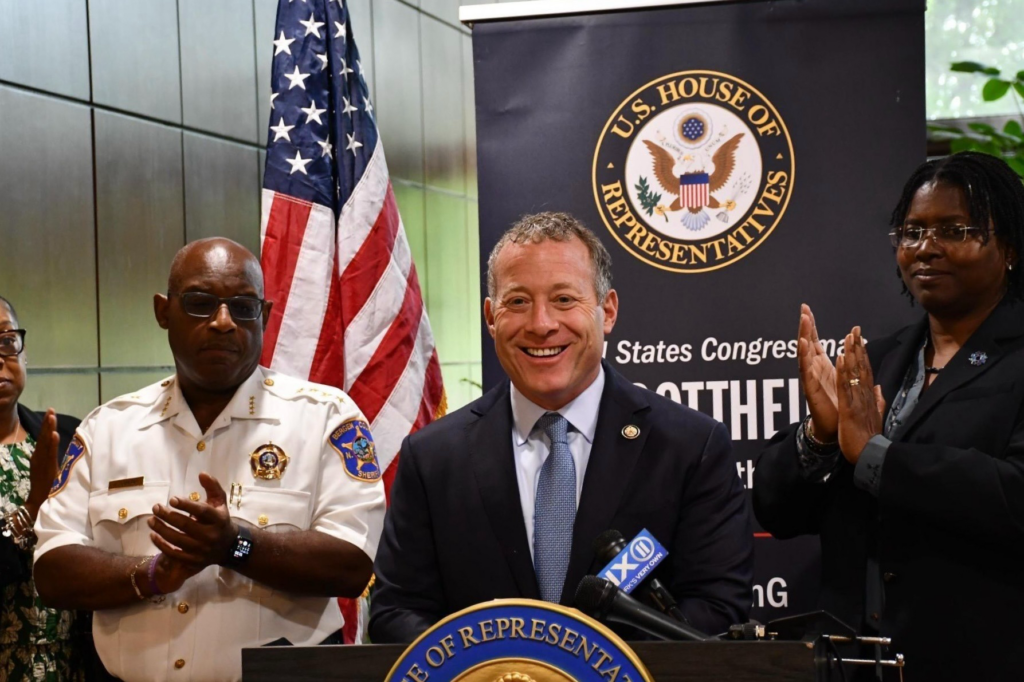
Above: Gottheimer announces funding to help stop violence in North Jersey.
HACKENSACK, NJ — Today, August 10, 2026, U.S. Congressman Josh Gottheimer (NJ-5) hosted a roundtable at Bergen’s Promise in Hackensack with leaders from Hackensack Meridian Health (HMH), law enforcement, local elected officials, and community stakeholders to discuss domestic violence, shootings, stabbings, and other forms of community violence, and the expansion of hospital-based violence intervention services in Bergen County. Gottheimer clawed back more than $1 million in federal resources to expand HUMC’s Community Health Worker Violence Intervention Program (HVIP). The roundtable discussion focused on the expansion of the program, how the federal funding will expand services for victims and their families, and how it will help reduce community violence in North Jersey.
Watch Gottheimer’s announcement here.
“Keeping Jersey families safe is about as common sense and bipartisan as it gets — and it starts with making sure our hospitals and communities have the tools they need to break the cycle of violence,” said Congressman Josh Gottheimer (NJ-5). “This is exactly the kind of partnership between the federal government, our hospitals, and our community organizations that actually gets things done for people. I’m proud to have fought for this funding. I’m proud it’s coming back to Bergen County where it belongs, and I’m ready to work with all of you to make sure this program succeeds.”
“Community violence isn’t just a public safety issue – it is a public health crisis. At Hackensack Meridian Health, we see the real-world impact of this every day, which is why we are building out our community health worker violence intervention program. By reaching people where they are and providing trauma-informed support, our goal is to break the cycle of violence before it repeats. I want to thank Congressman Gottheimer for pulling this group together. Real, lasting safety happens when healthcare systems, law enforcement, and local advocates sit at the same table and tackle this together,” said Dr. Nicole Harris-Hollingsworth, SVP, Social Impact and Population Health at Hackensack Meridian Health.
Hospital-based violence intervention programs (HVIPs) are multidisciplinary programs that identify patients at risk of repeat violent injury and connect them with hospital and community-based services to support recovery, address underlying risk factors, and work to reduce future victimization. HVIPs begin working with patients while they are still in the emergency department or hospital, then provide intensive community-based case management and support in the months following an injury.
From 2021 through 2026, Hackensack University Medical Center in Bergen County treated almost 3,000 victims of shootings, stabbings, beatings, and domestic violence — accounting for roughly 25 percent of the more than 11,400 violence victims treated across the entire Hackensack Meridian Health network in New Jersey. And these violence intervention programs work: just 5 percent of victims who participate are rehospitalized for another violent injury, compared with 36 percent of those who do not.
The federal funding clawed back by Gottheimer will support trained professionals, technology and supplies, and transportation costs needed to serve victims and families across North Jersey.
Gottheimer was joined by Bergen County Sheriff Anthony Cureton; Bergen County Prosecutor Mark Musella; Bergen County Commissioner Steven A. Tanelli; Dr. Nicole Harris-Hollingsworth, SVP Social Impact and Population Health, HMH; Ms. Sarah Lechner, SVP Chief of External Affairs, HMH; Ms. Leslie Eaddy, Manager, Social Impact and Population Health, HMH; Ms. Angelica Santomauro, Community Health Worker, Social Impact and Population Health, HMH; Ms. Katelyn Segilia, Supervisor, Social Impact and Population Health, HMH; Ms. Omna Syed, Manager, Government Relations, HMH; Dr. Abby Lowe, Assistant Director of Quality, Department of Emergency Medicine, HMH; Dr. Aakash Shah, Program Director, Violence Intervention Programs, HMH; Melissa DeBartolo, Director, Bergen County Department of Human Services; Mr. Dean Paskas, CEO, Bergen’s Promise; Shelisa Foster, Chief Operating Officer, Bergen’s Promise; Ms. Kathryn Werheim, Director of Community Resources, Bergen’s Promise; Ms. Shekinah Williams, Youth Justice Operations Manager, Bergen’s Promise; Ms. Jacqueline Yeboah, Behavioral Health Home Nurse Manager, Bergen’s Promise; Ms. Kelly Kopec, Health Promotion Manager, Bergen’s Promise; Mr. Jacques Hryshko, CEO, Family Connections; Dr. Amanda Santana, COO, Family Connections; Ms. Latisha Miller, Program Coordinator, Family Connections; Ms. Lil Corcoran, CEO, Women’s Rights Information Center; Ms. Lisa Maurer, Associate Executive Director, Women’s Rights Information Center; Ms. Dania Hochberg, Licensed Associate Counselor, Women’s Rights Information Center; Mr. William Salcedo, CEO, Big Brothers Big Sisters of Coastal and Northern New Jersey; Ms. Shannon Orefice, Director of Programs, Big Brothers Big Sisters of Coastal and Northern New Jersey; Ms. Helen Archontou, CEO, YWCA Northern New Jersey; Ms. Monique Joseph, Health Equity Specialist, YWCA Northern New Jersey; Ms. Simaza Sadek, Program Director of healingSPACE, YWCA Northern New Jersey; Ms. Kristine Pendy, CEO, Center for Hope and Safety; Beth Ostuni, Deputy Director of the Division of Alternatives to Domestic Violence; and Kate Gerathy, Advocacy Coordinator, Division of Alternatives to Domestic Violence.
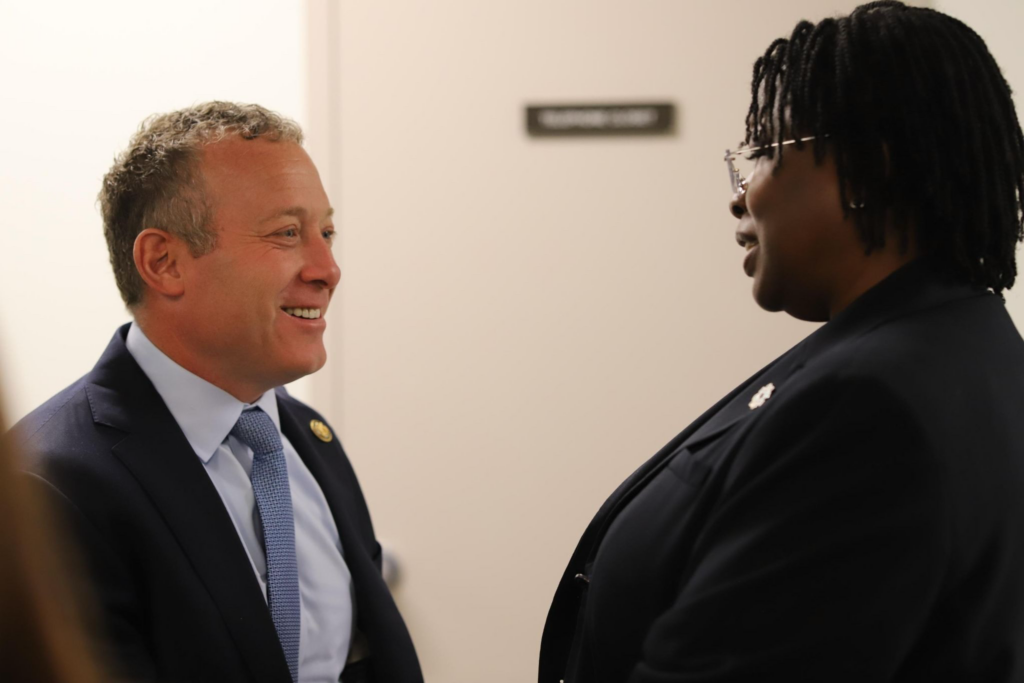
Below: Gottheimer hosts roundtable to help stop violence in North Jersey.
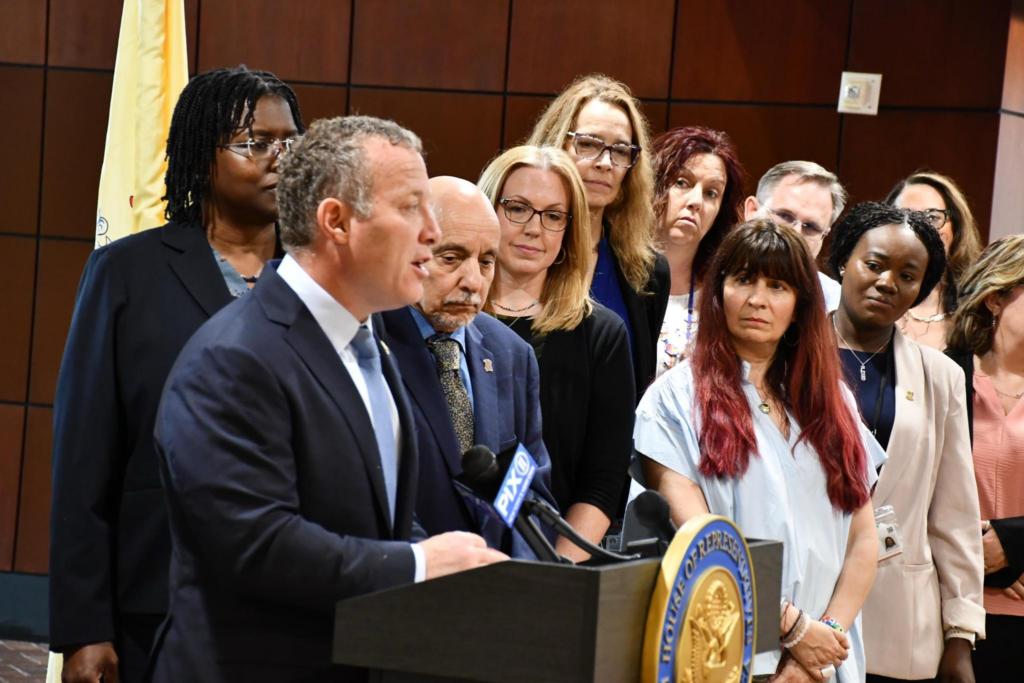
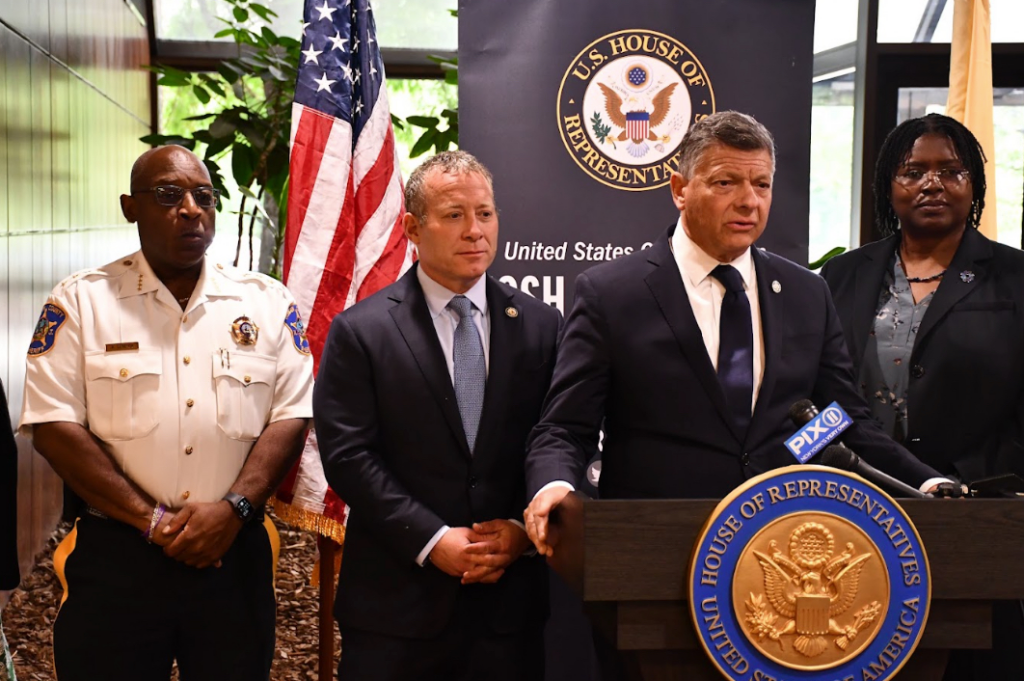
Gottheimer’s remarks as prepared for delivery:
Thank you so much, everybody, for being here today. And a special thank you to the whole team at Hackensack Meridian Health for helping organize today’s discussion, and to Bergen’s Promise for opening up your doors and hosting us. For those of you who don’t know, Bergen’s Promise is a nonprofit that connects children and families with critical mental health, behavioral health, and other support services. We are all very grateful for them.
I want to start by saying how thankful I am to sit down with the people doing this work every single day. The best ideas often don’t come from Washington — they come from the people on the front lines. The doctors, the community health workers, the folks who see community violence up close. You understand these challenges better than most around the country because you’re helping patients and families during some of the most difficult moments of their lives. Let’s talk about why we’re here.
Hackensack University Medical Center is one of the busiest and best hospitals in the state of New Jersey and the country.
In fact, it was just recognized once again by U.S. News & World Report as the number one hospital in New Jersey — a testament to the outstanding care and leadership right here in Bergen County. You provide that top-notch care at your facilities across our great state.
But even one of the nation’s top hospitals, in the ninth safest county in the country, sees the devastating impact of community violence every day. Between 2021 and 2024, Hackensack in Bergen County alone treated more than 2,100 victims of violence — people who came through your doors after shootings, stabbings, and beatings.
In other words, nearly one-quarter of all violence victims treated at HUMC hospitals statewide were treated right here in Bergen County. The bottom line: we are not immune from violence.
Now, the good news: violent crime is down nationally, and it’s down in Jersey. Across the country, violent crime dropped by 5.6 percent this year, and here in New Jersey, violent crime is down more than 16 percent. Two Bergen County communities — Emerson and Allendale — were named among the top ten safest in the entire country.
That’s real progress, and law enforcement and community organizations across Bergen County deserve a lot of credit for helping make our communities safer. As a side note, I also proudly represent most of Sussex County, which is also one of the safest counties in America, with Vernon Township, which has been ranked the safest municipality in our state for three years running. Some of the towns I represent in Passaic County — Ringwood and Wanaque — are always recognized as among the safest, too.
But here’s the thing. Even with crime on the decline, we still have thousands of people walking through the doors of HUMC every year who are victims of violent crime, whether that’s a gunshot wound, a stabbing, or domestic violence. Across the country, more than 44,000 Americans are killed by gun violence every year, and nearly 97,000 more are shot and wounded. In New Jersey, in 2024, 778 people were shot — that’s more than two people every day. Nationally, unintentional and violence-related injuries still cause more than 300,000 deaths a year.
So, the question isn’t whether we’ve made progress. The question is what we do for the people who are still walking through that emergency room door today, and how we stop them from walking back through it again.
That’s what this program is about.
We know that if you were treated for a violent injury once, you are at a much higher risk of being injured again. It’s called repeat victimization, and it’s one of the most frustrating cycles in public health. Hospitals see the same patients come back, again and again. Intervention works — if there is intervention, we see only 5% of victims rehospitalized versus 36% who do not receive these services.
So, the question is: what can you do about it? How do you help break the cycle of violence? Well, that’s why we are here today.
Working closely with Hackensack University Medical Center, I helped claw back more than a million dollars from Washington to Jersey for a new, federally-funded hospital-based violence intervention program, or an HVIP, here in Hackensack. This is a big deal.
HVIPs aren’t new to other hospitals in our state or to Hackensack’s hospitals — but they’ll be new to Hackensack Medical in Bergen County.
With an HVIP, instead of just stitching someone up and sending them back out the door, doctors, nurses, and trained community health workers will meet them right in the emergency department, at their bedside, in the moments immediately after an act of violence, when they’re most vulnerable and most open to accepting help and changing the course of their lives. Hospitals are uniquely positioned to do this work because they’re often the first place victims receive care after experiencing violence.
By connecting patients with support at these critical moments, hospital-based violence intervention programs play a key role in breaking the cycle of repeat victimization before it starts again.
HVIPs work. Since 2021, Project HEAL at Jersey Shore University Medical Center has used this approach in Monmouth and Ocean Counties, and it’s made a real difference. It has helped hundreds of victims of violence access counseling, emergency assistance, transportation, legal services, and other resources that reduce the likelihood of future violence.
What we’re talking about today is bringing that same proven model here to North Jersey, where it’s needed just as much.
Here’s how it works. This funding adds twelve community health workers through the hospital across Bergen County, plus a team leader to coordinate the whole effort. These aren’t bureaucrats. These are trusted, competent, trained professionals — many of them from the very same communities they’re serving — who go to a patient’s bedside, build trust, and then stay with that family long after they leave the hospital.
They assist with housing assistance, food assistance, job training, and mental health support — whatever it takes to help a victim of violence actually recover, not just physically, but mentally, emotionally, and economically, too.
Just to reiterate, of the $1,028,000 we clawed back from Washington to Jersey, $988,000 goes directly to the community health workers, $30,000 will help cover the costs of technology and equipment, and $10,000 to transportation. Every dollar has a purpose, and every dollar makes a difference.
This money isn’t coming out of your state, county, or property taxes. These are your federal tax dollars coming back to Jersey to cover our costs — instead of hitting our local property taxes. And it’s coming back here — not to some Moocher State like Mississippi or Alabama, that often gets back far more than it puts into the federal kitty.
As many of you know, when I first got to Congress, I made it a mission of mine to get more federal dollars back to Jersey. Historically, Moocher States like Mississippi would get about $4.38 back for every dollar they sent to Washington. West Virginia got about $4.23 back.
But New Jersey? We got about 67 cents on the dollar. Now, here in the Fifth Congressional District, we are up more than 357 percent. In the end, that helps lower your taxes and get more bang for the buck. Why should Moocher States get our money instead of it coming back home to you?
My job, and something I take really seriously, is making sure that when your tax dollars go to Washington, as much as possible comes back to North Jersey instead of disappearing into some other state’s budget or some other member’s pet project.
So, when HMH needed additional funding to take on violence and expand this program, I didn’t ask Trenton to raise a tax or ask the county to find room in its budget. I went and got this money back from Washington — dollars that were already yours to begin with.
And I’ll say this, too. HMH isn’t just relying on the federal government to fund this critical work. They’re already investing about $2.2 million a year into violence intervention, with more than 30 team members working on this across the network. That tells you everything you need to know about their commitment.
This federal funding isn’t replacing that. It’s building on top of it, giving them the extra capacity they need to reach the hardest-hit communities.
So, what does success look like a year from now? It looks like fewer repeat victims walking back through that emergency room. It looks like victims and their families getting connected to housing, to jobs, to counseling, instead of falling through the cracks. It looks like Bergen County becoming a model — the same way Project HEAL became one in Monmouth and Ocean Counties — that HMH can expand to other hospitals across its entire network.
To everyone at Hackensack Meridian Health, to everyone at Bergen’s Promise, and to everyone at this table today doing the hard work on the ground — thank you. This is exactly the kind of partnership between the federal government, our hospitals, and our community organizations that actually gets things done for people. I’m proud to have fought for this funding. I’m proud it’s coming back to Bergen County where it belongs, and I’m ready to work with all of you to make sure this program succeeds. There is nothing partisan about it.
If we keep working together to improve our community and keep people safe, in the greatest country in the world, I know that our best days will always be ahead of us.
Thank you.
###