Oct 23, 2026
Press
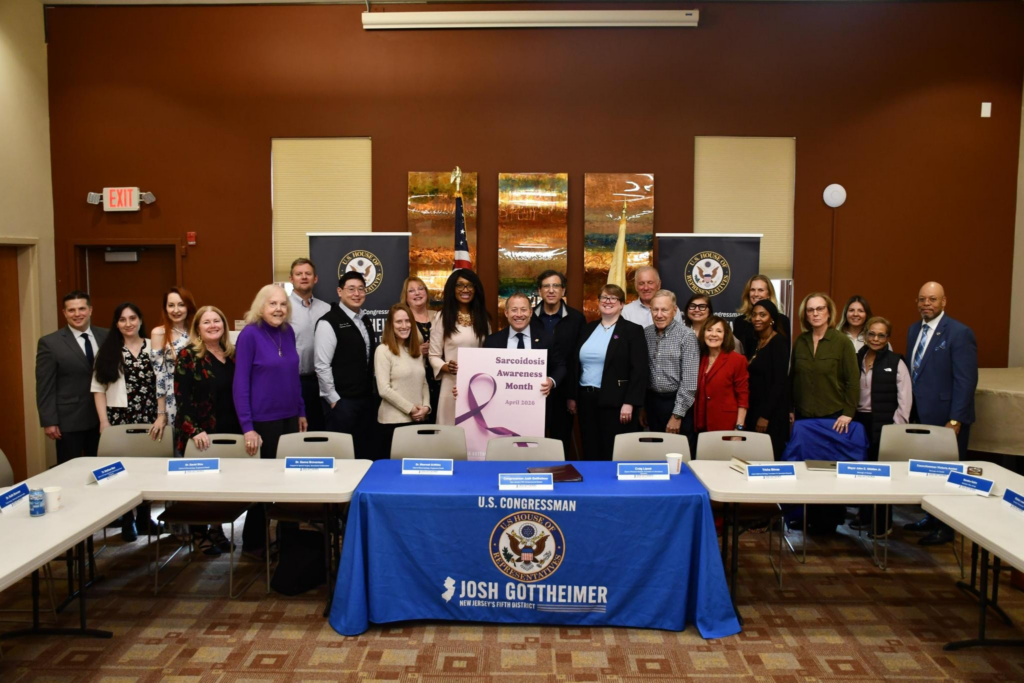
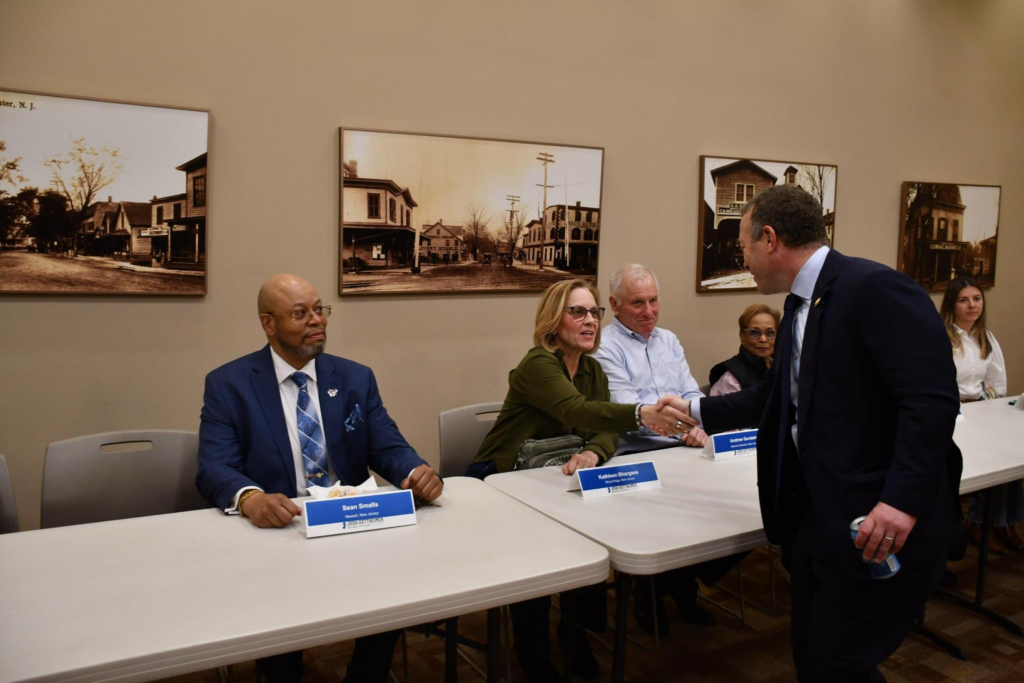
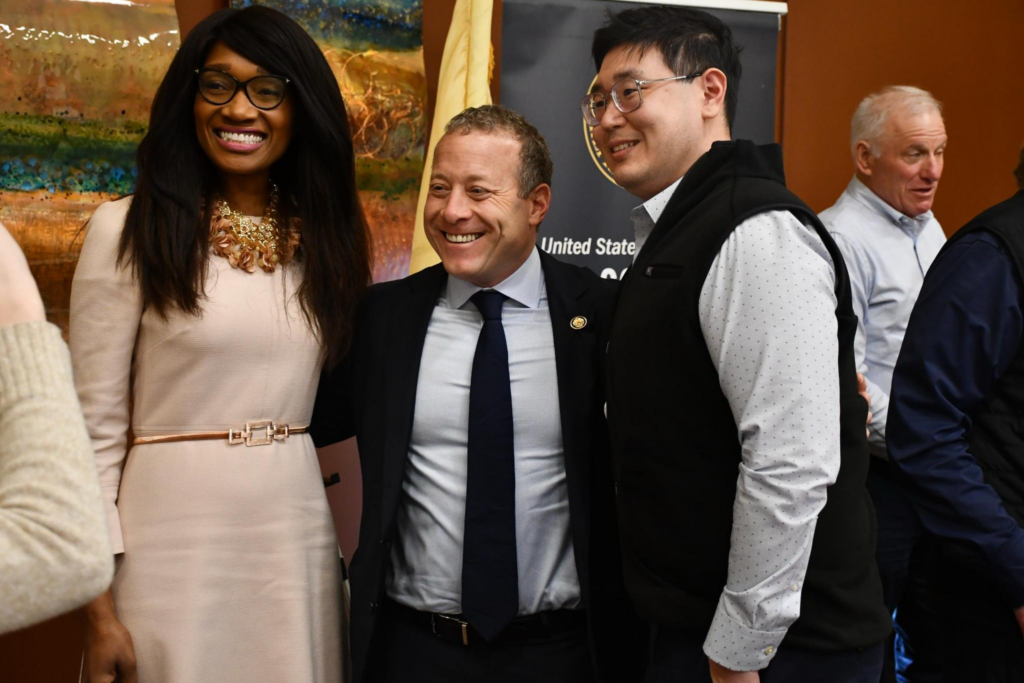
Above: Gottheimer hosts Sarcoidosis roundtable with leading doctors, researchers, advocates, local electeds, patients, and families.
CLOSTER, NJ — April 24, 2026, U.S. Congressman Josh Gottheimer (NJ-5) hosted a roundtable in Closter with the leading doctors, researchers, advocates, local elected officials, patients, and families to discuss sarcoidosis, a rare and often misunderstood inflammatory disease that affects an estimated 150,000 to 200,000 Americans.
The roundtable brought together experts from Englewood Health, Hackensack Meridian Health, Robert Wood Johnson University Hospital, Valley Health System, and the Hospital for Special Surgery, along with representatives from the Foundation for Sarcoidosis Research (FSR) and patients from across New Jersey.
“During Sarcoidosis Awareness Month, it’s critical that we bring together the voices on the front lines — doctors, researchers, advocates, patients, and families — to help shape better policy and ultimately save lives,” said Congressman Gottheimer (NJ-5). “Behind every statistic is a person, a family, and a story. We need more urgency, more research, and more action.”
Gottheimer shared that the issue is deeply personal, having lost his mother, Gwenn, to sarcoidosis in 2018 after years of battling the disease.
“Like so many families, we lived through the confusion, uncertainty, and frustration that come with a disease that is too often underdiagnosed and under-researched,” said Gottheimer. “My mom fought every day with strength and resilience, but like so many patients, she didn’t have the options we’re fighting to create today.”
Sarcoidosis affects multiple organs and bodily systems, and in many cases, has no known cure. More than 90 percent of rare diseases still lack proper approved treatments.
As part of his efforts in Congress, Gottheimer highlighted several bipartisan initiatives aimed at accelerating research and improving patient outcomes:
The Congressman emphasized the importance of collaboration between policymakers and those directly impacted by the disease. Participants discussed challenges, including delayed diagnoses, limited treatment options, barriers to clinical trials, and the need for greater awareness and funding.
Gottheimer thanked the participants for sharing their experiences and pledged to continue working in a bipartisan way to advance solutions for those living with sarcoidosis and other rare diseases with the support of the advocates and medical professionals.
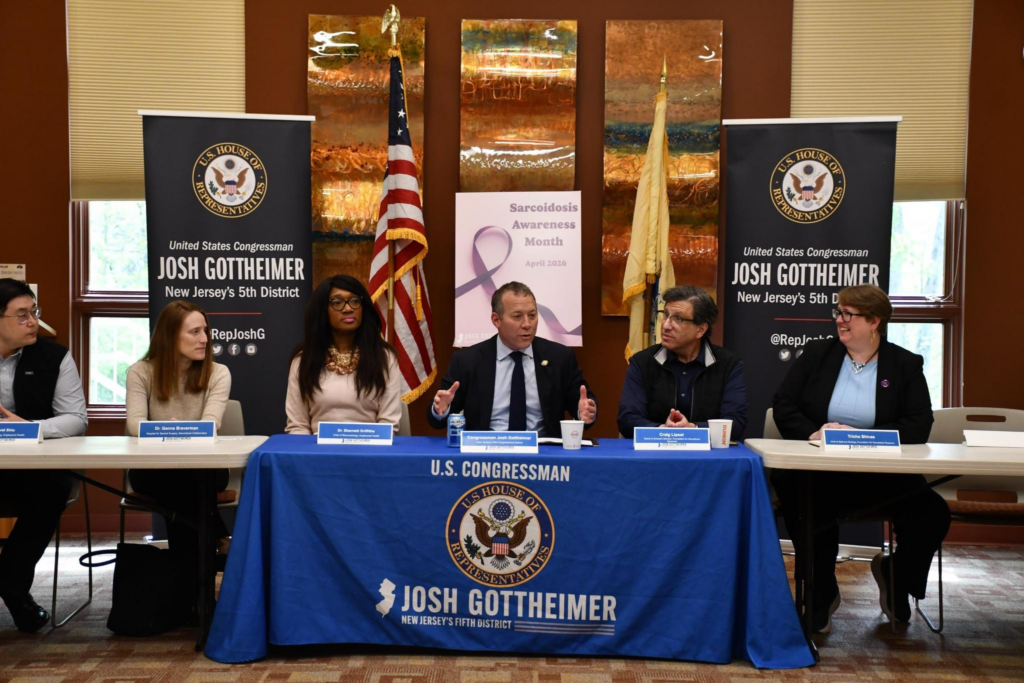
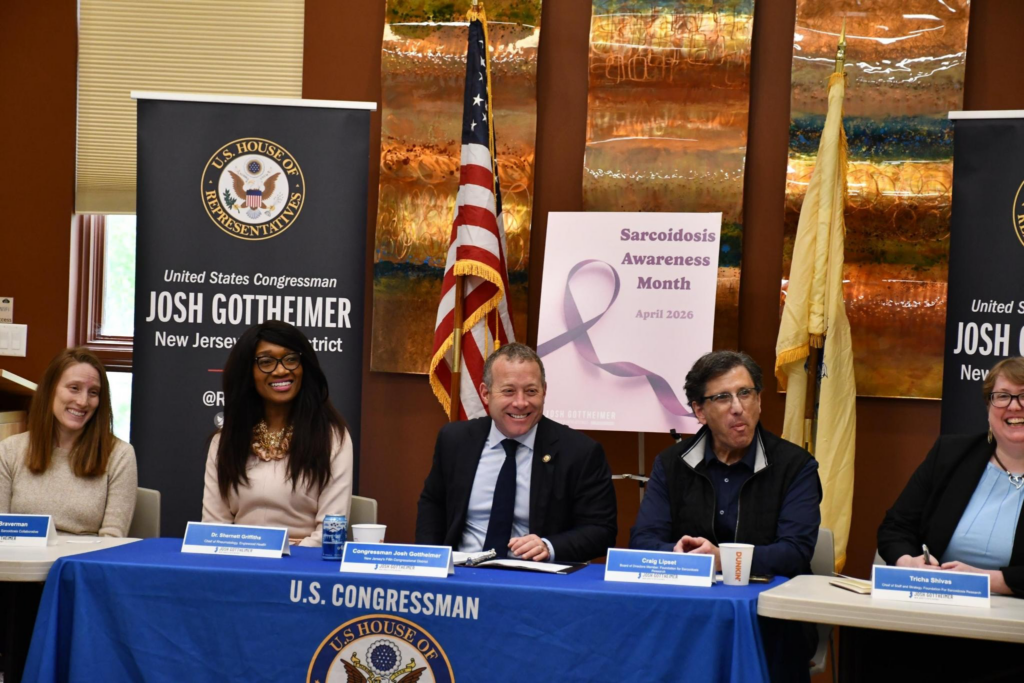
Gottheimer was joined by Tricha Shivas, Chief of Staff and Strategy at the Foundation For Sarcoidosis Research (FSR) and Board Member at FSR Craig Lipset, medical professionals including Dr. Genna Braverman from the Hospital for Special Surgery Sarcoidosis Collective, Dr. Shernett Griffiths Chief of Rheumatology at Englewood Health, Dr. David Shiu Chief of Pulmonology at Englewood Health, Dr. Keith Brenner from Hackensack Meridian Health, Jonathan Chebra from Hackensack Meridian Health, and Dr. Elana Levy, Pulmonology at Valley Health System. Gottheimer was also joined by Closter Mayor John Glidden and Closter Councilwoman Victoria Amitai. The discussion also included numerous New Jersey residents including Sean Smalls of Newark, Kimberly Ritch of Martinsville, Sandra Kahn of Montclair, Dr. Matthew Warr of Westfield, Elisa Lowe of Cynwyd Pennsylvania, Leslie Maltz of Woodcliff Lake, Kathleen Bhargava of Wood-Ridge, Patricia Sirois of Princeton, Liz Figenshu of Bloomfield, Carol Polak-Reid of Paramus, Michelle Garcia Carbain of Hasbrouck Heights, Andrew Gerstein of Monroe Township and Catherine Dunn of Robbinsville.
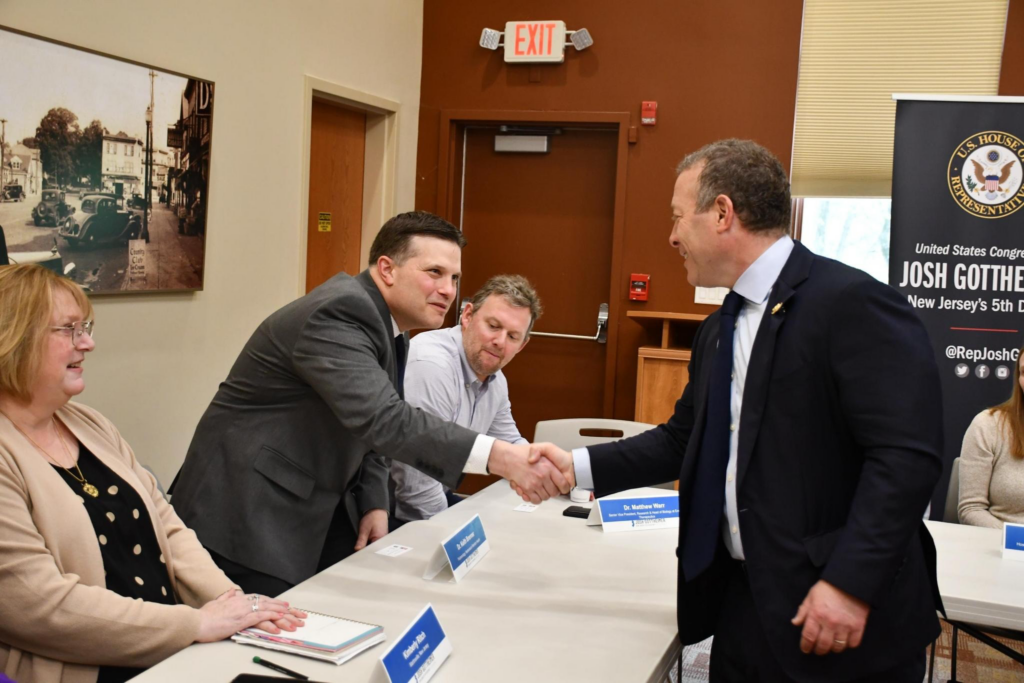
Below: Gottheimer hosts Sarcoidosis roundtable with leading doctors, researchers, advocates, patients, and families.
Gottheimer’s remarks as prepared for delivery:
Good afternoon, everyone, and thank you all for being here.
I want to start by saying how grateful I am to each of you — the doctors, researchers, advocates, patients, and family members for taking the time to join this very important conversation during Sarcoidosis Awareness Month. Your work, your experiences, and your voices are essential to shaping better policy and, ultimately, saving lives.
Like many of you, today’s discussion is deeply personal for me.
As some of you know, I lost my mom, Gwenn, in 2018 to sarcoidosis, a rare, often misunderstood inflammatory disease that can affect multiple organs and systems. In too many cases, it has no cure.
And like so many families here, we didn’t just lose a loved one. We lived through the confusion, the uncertainty, and the frustration that come with a disease that is too often underdiagnosed and under-researched. Most people never even heard of it.
I remember, in 1995, on a tour of Colombia for my sister, my mom had a tough time climbing the long sets of stairs that seemed to cover the campus. At the time, I didn’t think much of it, but looking back, it was the first sign of a long and painful journey for her and our family.
Yet, throughout all of the doctor’s visits, treatments, good days, and bad days, she was always herself. She was always my mom. Always had a great attitude and big smile on her face.
My mom grew up on the great Jersey Shore, right near Asbury Park, home to the best beaches in Jersey, and, of course, Bruce Springsteen. My mom devoted her life to teaching and built a family and a community filled with love, laughter, and friendship. Despite barely cresting over 4 foot 10 and a half, on a good day, she had this larger-than-life personality, and very high heels. Her laugh filled the room, her smile lit it up, and those things never changed, even when she was battling this awful illness.
Gwenn was the mom that every one of my friends wished they had. She kept our house stocked with snacks and sweets, and was always looking for an excuse to go to the local diner for waffles piled high with whipped cream. She was the life of the party, always the first onto the dancefloor and the last one to leave, never missing an opportunity to bring joy to those around her.
And while she kept that same bubbly, loving personality throughout her sickness, Sarcoidosis took a lot from her over the years.
For decades, she had quarterly visits with her doctors, and the news was rarely good. I watched as she slowly lost her ability to complete tasks that are second nature to many of us. I knew she always wanted to take care of her kids, and it was a real challenge for her to accept that the shoe was now on the other foot.
As it stands, Sarcoidosis is a “one-way disease,” with no known cure. Despite that fact, she never stopped fighting, and she never stopped living her life to the fullest.
When her granddaughter — my daughter Ellie — was born, she would crawl down onto the floor, oxygen tank and all, to play with her on the carpet.
When my sister Emily got married, my Uncle Lou and I each took one of her arms to walk her down the aisle. In classic Gwenn fashion, she was shimmying and smiling the whole way down, proud of her daughter, and proud that she had kept fighting to make it to that day.
What my family went through is, unfortunately, not unique.
There are an estimated 150,000 to 200,000 Americans living with sarcoidosis today, and thousands more facing other rare diseases, many without clear diagnoses, effective treatments, or access to clinical trials.
And that’s why we’re here.
Because behind every statistic is a person. A family. A story like my mom’s and the ones represented around this table.
It’s also why I’ve made it a priority in Congress to push for more research, more funding, and more urgency when it comes to rare diseases.
Recently, I launched the bipartisan Congressional Sarcoidosis Caucus with Republican member, Max Miller of Ohio, bringing together Democrats and Republicans to raise awareness, drive research, and improve outcomes for patients.
During this year’s Rare Disease Week, I introduced a bipartisan package of legislation aimed at accelerating cures, improving clinical trials, and ensuring that patients have access to the treatments they need.
The package includes Cameron’s Law to restore the Orphan Drug Tax Credit that fuels innovation and ensures we can support finding cures. It has huge support from across the spectrum, including NORD, Everylife, BIONJ, and many other rare disease pioneers.
The legislation is named after 11-year-old Cameron Hyman of Wyckoff, New Jersey, who was diagnosed with Sanfilippo Syndrome, a rare genetic disease that affects the central nervous system.
Currently, there are no FDA-approved treatments for Sanfilippo Syndrome. Despite scientific advances, more than 90 percent of rare diseases still do not have therapies or treatments.
Cameron’s Law would reverse cuts made under the 2017 Tax Hike Bill that reduced the Orphan Drug Tax Credit by half, a change that has slowed innovation and made treatments for rare diseases even harder to develop and access.
By restoring the full Orphan Drug Tax Credit, Cameron’s Law will incentivize life sciences companies to accelerate research and development for orphan diseases.
The bipartisan legislation will also help grow New Jersey’s talent pipeline for high-quality life sciences jobs through expanded training partnerships and apprenticeship programs, ensuring the state remains a national leader in biotechnology and medical innovation.
I also introduced the bipartisan Gwenn’s Law, which will fund recruitment and public awareness campaigns to increase the number of women in NIH clinical research trials, especially for rare diseases, and increase the number of women in federal bleeding disorder programs.
It also creates a task force between HHS, NIH, FDA, CMS, and the private sector to produce a report on rare diseases that disproportionately impact women, helping ensure more funding goes toward those diseases and conditions.
Since 2019, as a member of the Rare Disease Caucus, as part of the annual appropriations process, I have championed an effort to significantly increase funding for Sarcoidosis research at the NIH through the National Heart, Lung, and Blood Institute. These dollars would be used for more research to find better treatments, more comprehensive screenings, and ultimately a cure.
But, the work can’t stop there. I am working with the FDA to ensure that Sarcoidosis continues, as it should, to be considered a rare disease. That’s critical for investing in a cure, and to qualify for many research programs. But, somehow, some bureaucratic definition is now in the way.
With only around 60,000 Sarcoidosis patients requiring long-term drug treatments, there is no reason why Sarcoidosis should have any delays in rare disease designation. I’m working to fix that.
At the end of the day, however, I can fight in Washington, but the real cures happen thanks to your efforts on the ground, in hospitals, in doctors’ offices, clinicians on the front lines, and researchers in laboratories working to unlock new treatments. You are all doing the real work, especially all of the advocates working with my fellow legislators and the patients and families navigating this every day.
We need to hear directly from all of you.
We need to understand where the gaps in diagnosis still exist, what barriers patients face in accessing care or trials, and how we can better support innovation while making treatments more affordable and accessible
Because at the end of the day, this is about urgency.
Sarcoidosis, like so many rare diseases, doesn’t wait. Families don’t have the luxury of time. And neither should we.
My mom didn’t have the options we’re fighting to create today.
We were lucky to have incredible doctors who helped my mother keep her trademark smile throughout it all, especially where she had her primary treatment at the University of Pennsylvania. Dr. Kreider was so good to my mother, throughout it all. But, until the end, we were all still looking for an answer. Looking for real hope that was not yet available back then, and still missing for many today.
So, today is about listening to all of you. It’s about learning. And, it’s about working together to turn your insights into action.
I want this to be an open, honest conversation. Tell us what’s working. Tell us what’s not. Tell us what we in Congress need to do better. We are partners in this fight. Together, we can raise awareness, expand research, and improve care. And, we can give families something they deserve — hope. I know we can do this. We live in the greatest country in the world, and if we work together, our best days will always be ahead of us.
Thank you again for being here. I’m looking forward to hearing from each of you. I just want to go around the table quickly, so you can please introduce yourselves. Where you’re from, and a little bit about why you’re here.
###